Designing a nursery is one of the most memorable parts of preparing for a new baby, but shopping for luxury furniture packages can quickly become overwhelming. Premium nursery furniture sets promise heirloom solid woods, non-toxic organic finishes, and modular conversion capabilities that grow alongside your child. However, a premium price tag does not automatically guarantee superior real-world functionality or long-term durability in a busy household.
In 2026, evaluating high-end nursery collections requires looking past lifestyle photography to scrutinize drawer joinery, mechanical hardware, room proportions, and environmental safety standards. As gear testers who analyze baby products daily, we focus on structural integrity and practical usability. This guide covers what truly matters when investing in a high-end nursery package—from frame construction to room flow—so you can allocate your budget where it delivers real value.
As an Amazon Associate we earn from qualifying purchases at no extra cost to you.
Material Quality: Solid Hardwoods vs. Composite Construction
The foundation of any high-end nursery set is its primary frame construction. Lower-tier furniture frequently relies on medium-density fiberboard (MDF) wrapped in paper veneers, which can chip under daily wear and swell when exposed to humidity or liquid spills. Truly high-end sets utilize kiln-dried hardwoods such as American poplar, European beech, oak, or maple. Kiln drying removes excess moisture from the timber, preventing warping, cracking, and structural shifting over years of climate changes.
Pay close attention to drawer box construction, as this is where low-quality craftsmanship shows first. Look for solid wood drawer boxes assembled with English or French dovetail joints rather than simple staples, butt joints, or glue. Dovetail joinery’s mechanical interlocks hold panels together securely under heavy load, ensuring drawers withstand thousands of cycles without sagging or pull-apart failures.
Safety Certifications and Low-Chemical Finishes
Infants spend up to sixteen hours a day in their nursery, making indoor air quality a primary consideration. Standard furniture often releases volatile organic compounds (VOCs) from adhesives, stains, and clear coats. Premium nursery furniture sets should hold independent environmental credentials, most notably Greenguard Gold Certification. This standard tests products for over ten thousand chemicals and chemical emissions, ensuring the furniture meets strict limit thresholds for heavy metals, formaldehydes, and phthalates.
Beyond air quality testing, examine the finish application itself. High-end manufacturers utilize multi-step hand-applied paint or oil finishes that are lead-safe and non-toxic. Because teething infants frequently chew on upper crib rails, look for sets built with non-toxic polyurethane or natural plant-based oils that resist chipping and posing ingestion hazards.
Convertibility and Conversion Kit Availability
A primary selling point for upscale nursery sets is long-term adaptability. Convertibility allows a single crib to transition through multiple stages: crib, toddler bed with safety rail, daybed, and eventually a full-size bed frame. However, convertible designs vary significantly in structural execution and practical convenience.
Always verify whether conversion kits and conversion rails are included with the original purchase or sold separately. Premium brands often update finish lines or retire colorways within two to three years. If you do not buy the toddler guardrail and full-size bed frame conversion rails alongside your initial crib purchase, you risk finding those matching components discontinued when your toddler is ready to transition. Additionally, check if the dresser features a removable changing topper tray so the unit transforms seamlessly into an adult bedroom dresser without leaving visible screw holes on the top surface.
Drawer Hardware, Stability, and Anti-Tip Systems
The daily experience of using a nursery set depends heavily on small mechanical hardware components. High-performance dressers feature full-extension, ball-bearing drawer glides equipped with soft-close mechanisms. Soft-close slides prevent accidental hand pinching and eliminate loud slamming noises that can wake a sleeping baby during late-night outfit changes.
Structural stability is equally crucial. Multi-drawer dressers present a potential tip-over risk when toddlers begin pulling open drawers to climb them. Look for dressers engineered with interlocking drawer systems that allow only one drawer to open at a time, keeping the center of gravity stable. Regardless of internal safety interlocks, high-end nursery dressers must include robust, steel-cable wall-anchoring hardware to secure the frame directly to wall studs.
Sizing Proportions and Room Clearance Planning
High-end nursery sets tend to feature larger footprints, thicker corner posts, and heavier trim details than compact flat-pack alternatives. Before committing to a full three-piece or four-piece matching set, map out your room dimensions, doorway widths, and architectural obstacles like floor vents and windows.
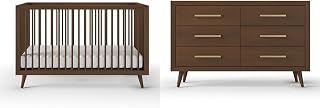
Maintain at least thirty inches of clear walkway space in front of the dresser to allow full drawer extension while standing comfortably. Ensure the crib is positioned away from windows, cords, and heating radiators. If your nursery is under twelve feet by twelve feet, opting for a streamlined convertible crib paired with a single wide six-drawer dresser—using a removable topper instead of a standalone changing table—keeps the floor plan open while preserving essential storage capacity.
When to Spend More vs. Where to Budget
Investing in nursery furniture does not mean every item requires an equal spend. Prioritize your budget on pieces that endure physical interaction and long-term use. The main dresser and changing combo receives continuous daily torque from opening drawers and holding shifting weights; spending more here on solid framing and soft-close hardware yields maximum durability.
Conversely, you can keep costs manageable by declining optional add-on accessories like attached changing stations, specialized bassinet attachments, or branded storage hutches. Standard, standalone dressers with modular changing pads offer superior versatility, easier redecoration options, and better resale value when your child outgrows nursery setup needs.
Related Guides
For detailed head-to-head performance evaluations of top-rated collections, explore our curated breakdown of the best premium nursery furniture sets. If you want to compare high-end collections against mid-range options, read our broader roundup of the best nursery furniture sets to find the ideal match for your space and budget.
FAQ
Are conversion kits usually included with premium crib sets?
Most luxury nursery sets sell toddler guardrails and full-size bed conversion rails separately. Manufacturer inventory changes quickly, so it is best practice to buy matching conversion hardware at the same time you buy the crib.
What certification is most important for nursery furniture finishes?
Greenguard Gold Certification is the industry benchmark for healthy indoor air quality. It verifies that the furniture emits low levels of chemical off-gassing, protecting sensitive infant respiratory systems.
Is solid wood always superior to engineered wood in nursery furniture?
Solid hardwood delivers superior longevity, moisture resistance, and screw-holding strength for main structural frames and drawer boxes. However, high-grade real wood veneers over stable cores are sometimes intentionally used on large side panels to reduce excess weight without compromising strength.
How can I prevent a heavy nursery dresser from tipping over?
Always secure heavy nursery dressers directly to wall studs using metal anti-tip anchor straps. Premium dressers also incorporate heavy backer plates and interlocking drawer mechanisms that prevent multiple drawers from opening simultaneously.