When you are sitting in a dim room at three in the morning trying to soothe a fussy newborn, your nursery glider suddenly becomes the most crucial piece of furniture in your home. Unlike standard living room armchairs, a nursery glider is an active tool designed to help with late-night feeds, physical recovery after childbirth, and hundreds of hours of gentle rocking. Picking the wrong chair can lead to neck strain, backaches, or a squeaky frame that wakes a finally sleeping baby the moment you try to stand up.
As nursery designs evolve for 2026, manufacturers are adding everything from built-in electronic control panels to memory foam cushions. However, fancy features often obscure what actually matters: basic ergonomics, fabric durability, and smooth motion mechanics. This guide cuts through the marketing noise to help you evaluate frame types, structural dimensions, fabric performance, and recline mechanisms so you can choose a seating setup that supports your body and fits your nursery perfectly.
As an Amazon Associate we earn from qualifying purchases at no extra cost to you.
1. Motion Mechanics: Glider vs. Rocker vs. Swivel
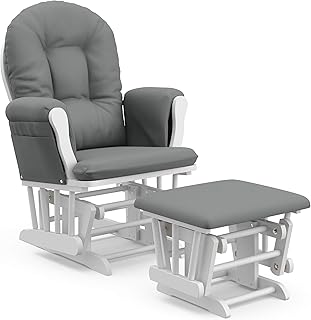
Understanding the difference between motion types is the first step in narrowing down your choices. A traditional rocker moves in a distinct back-and-forth arc. While classic, this rocking motion requires more leg effort to sustain and can sometimes feel tip-prone or jerky during tired night feeds. Gliders, on the other hand, move along a smooth horizontal track, providing a continuous, low-effort linear slide that requires minimal exertion from your legs and core.
Adding a swivel mechanism to a glider introduces 360-degree rotational movement. A swivel-glider allows you to reach for burp cloths, side tables, or water bottles without breaking your gliding rhythm or straining your torso. If your nursery layout places the chair in a corner or near a crib, a swivel function ensures you can easily pivot away from walls without sliding the entire heavy frame across the floor.
2. Ergonomics: Back, Arm, and Head Support
Ergonomics make or break a nursery glider. Pay close attention to seat depth and backrest height. A backrest must be tall enough to support your head fully when leaning back; if your head hangs over the top cushion without support, your neck muscles will quickly fatigue during long feeding sessions. Look for a back height that allows your head and neck to rest comfortably against the cushion.
Armrest height and padding are equally critical. Deep, plush padding on wide armrests reduces shoulder and arm fatigue while holding a baby or supporting a nursing pillow. If the armrests are too low, you will find yourself slouching forward; if they are too high, your shoulders will stay hunched. Test or measure the seat depth as well—if the seat is too deep, your back will not touch the lumbar cushion without your knees bending awkwardly over the edge.
3. Fabric Selection: Stain Resistance and Maintenance
Spills, spit-up, and diaper leaks are inevitable in a nursery. Choosing the wrong fabric can turn a beautiful chair into a permanently stained eyesore within weeks. Prioritize high-performance synthetic fabrics, treated polyester blends, or performance velvet. These materials resist liquid absorption, allowing you to wipe up accidents with a damp cloth and mild detergent before stains set into the foam padding.
Avoid pure cotton weaves, linen, or untreated natural fibers unless the chair features a fully removable, machine-washable slipcover. Smooth, non-porous fabrics are generally much easier to spot-clean than thick textured tweed or boucle, which can trap lint, crumbs, and liquids between the fibers. If you prefer faux leather, ensure it is breathable and high-grade, as cheap vinyl can feel sticky in warm weather and cold during winter nights.
4. Recline Functionality: Power vs. Manual
Reclining capability allows you to adjust your posture during long holding sessions, but the mechanism you choose dictates convenience and safety. Manual reclines usually rely on an internal pull-lever or an exterior handle. While manual mechanisms are generally cheaper and do not require proximity to a wall outlet, kick-starting the footrest back into place requires significant leg strength, which can be difficult or uncomfortable if you are recovering from a surgical birth.
Power reclines utilize an electric motor operated by buttons built into the side of the chair. Power gliders allow you to adjust the backrest and footrest smoothly to precise angles without jarring movements that might wake a sleeping baby. However, power models are heavier, require access to a nearby power outlet (or an expensive rechargeable battery pack), and operate slightly slower than manual levers.
5. Spatial Footprint and Clearance Needs
Nursery rooms are often tight on space, making chair dimensions a major deciding factor. Measure both the footprint of the chair when upright and its full length when fully reclined. A standard reclining glider requires anywhere from 10 to 18 inches of clearance behind the frame to recline fully without hitting the wall. If you have limited floor space, look for “wall-hugger” glider designs specifically engineered to slide forward on their tracks as they recline, requiring only a few inches of rear clearance.
Do not forget to measure doorway widths along the path to the nursery. Gliders often arrive in large, heavy boxes or pre-assembled bases that can be difficult to maneuver through narrow hallways and 30-inch bedroom door frames. Check the box dimensions or unassembled frame width before ordering to ensure a smooth setup experience.
6. Gliding Ottomans vs. Integrated Footrests
Supporting your feet elevates your knees, which takes pressure off your lower back and helps stabilize a nursing pillow. You generally have two choices: a matching gliding ottoman or an integrated pop-out footrest. A separate gliding ottoman moves in tandem with your chair, providing a fluid gliding experience for your entire body. Many gliding ottomans also come with built-in pull-out footrests or internal storage compartments.
The drawback of a separate ottoman is its permanent footprint; it takes up dedicated floor space in front of the chair whether you are using it or not. Integrated footrests tuck away cleanly when not in use, making them ideal for smaller rooms. However, ensure the footrest mechanism closes quietly and smoothly so you do not startle your baby when standing up.
7. Where to Spend vs. Where to Save
When budgeting for a nursery glider, prioritize spending on frame construction, mechanism hardware, and cushion density. A frame built from kiln-dried hardwood or steel will resist squeaking, warping, and breaking down over years of daily use. High-density foam cushions maintain their shape and support, whereas cheap low-density foam flattens out after a few months, leaving you sitting on hard structural bars.
You can safely save money by skipping non-essential add-ons like built-in wireless phone chargers, ambient LED lighting, or massage features. These extra electronic components add potential points of mechanical failure and rarely add true comfort during actual baby care. Focus your budget entirely on core physical comfort, silent mechanical tracks, and easy-to-clean upholstery.
Related Guides
To see how these selection criteria apply to real-world models across various price points, explore our list of compared and ranked nursery gliders to find the perfect fit for your nursery space.
FAQ
How long will we realistically use a nursery glider in our home?
Most families use a nursery glider heavily during the first two to three years for feeding, reading, and bedtime routines. If you choose a neutral performance fabric and a classic silhouette, the glider can easily transition into a living room or reading nook once your child grows out of the nursery stage.
Is a power glider safe to use around crawling babies and toddlers?
Yes, but you should take basic safety precautions. Ensure the scissor mechanisms and motorized tracks under the base are fully covered by fabric skirts or protective housing, and always unplug the power cord or lock the power controls when your child starts crawling around the room unsupervised.
What is the best way to prevent a glider from developing squeaks?
Squeaks are usually caused by friction in the metal gliding track or loosening bolts in the frame. Inspect and tighten frame bolts every few months, and apply a small amount of silicone lubricant spray directly to the metal ball-bearing tracks if you notice any resistance or noise during operation.
Can I use a regular living room armchair instead of a nursery glider?
While a regular armchair provides a place to sit, it lacks the gentle, continuous movement that helps soothe infants to sleep. Stationary armchairs also tend to lack the specialized arm padding, tall back support, and stain-resistant performance fabrics specifically engineered for intense nursery use.