Key takeaways
- Best Overall: Solly Baby Wrap. One size listed from XXS to XXL and above, 8 to 25 lb, TENCEL Modal fabric.
- Best Quick-Adjust Option: Boba Ring Sling. One size XXS to XXL, adjusted by pulling fabric through the rings.
- Best Budget Wrap: Momcozy Baby Wrap Carrier. Two-piece, XXS to XXL adjustable fit, newborn to 33 lb.
- Best Compact Structured Carrier: BabyBjörn Baby Carrier Mini. Official range 7 to 24 lb, fixed panel sized for small babies.
- Best Convertible: Beco Gemini. 7 to 35 lb, adjustable seat listed XS to XXL, four positions.
- Best Long-Term Structured, With a Caveat: Ergobaby Omni. Four positions, but bulky lumbar padding is a common petite complaint.
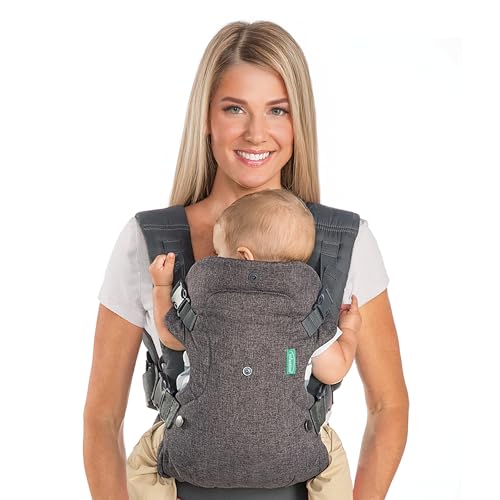
The best infant carrier for a petite mom is a wrap or ring sling that fits by adjustment rather than by a fixed waistband: the Solly Baby Wrap is our top pick for a soft, one-size wrap listed from XXS up, and the Boba Ring Sling is the runner-up for quick carries because you set the fit yourself. If you prefer buckles, the BabyBjörn Baby Carrier Mini is the safest structured choice for a small torso because its panel is sized for small babies and sits compactly on the chest.
This guide is research-based. We did not personally use these products. We compared manufacturer spec pages, retailer listings and independent reviews, and we write “not listed” where a figure, such as a minimum waist size, could not be confirmed. Petite fit is where listing claims are weakest, because makers publish maximum waist sizes far more often than minimums. Try on in person if you can, and ask your pediatrician about carrying a baby who was early or has any health concern.
Top Picks at a Glance
- Best Overall: Solly Baby Wrap. One size listed from XXS to XXL and above, 8 to 25 lb, TENCEL Modal fabric.
- Best Quick-Adjust Option: Boba Ring Sling. One size XXS to XXL, adjusted by pulling fabric through the rings.
- Best Budget Wrap: Momcozy Baby Wrap Carrier. Two-piece, XXS to XXL adjustable fit, newborn to 33 lb.
- Best Compact Structured Carrier: BabyBjörn Baby Carrier Mini. Official range 7 to 24 lb, fixed panel sized for small babies.
- Best Convertible: Beco Gemini. 7 to 35 lb, adjustable seat listed XS to XXL, four positions.
- Best Long-Term Structured, With a Caveat: Ergobaby Omni. Four positions, but bulky lumbar padding is a common petite complaint.
Quick Comparison Table
| Product | Style | Size and weight (as published) | Petite note | Price tier |
|---|---|---|---|---|
| Solly Baby Wrap | Stretch wrap | 8 to 25 lb; about 5.5 yards; fits XXS to XXL+ | No waistband to size; long fabric tails to manage | Premium |
| Boba Ring Sling | Ring sling | 8 to 35 lb; one size XXS to XXL | Fully adjustable; one-shoulder load | Mid-range |
| Momcozy Baby Wrap Carrier | Two-piece wrap | Newborn to 33 lb; XXS to XXL | Sized to clothing; check the chart | Budget |
| BabyBjörn Mini | Structured panel | 7 to 24 lb; 21 to 30 in | Compact; minimum waist not listed | Mid-range |
| Beco Gemini | Structured convertible | 7 to 35 lb; adjustable seat XS to XXL listed | Seat width adjusts to baby, not to wearer; minimum waist not listed | Mid-range |
| Ergobaby Omni | Structured convertible | Newborn to 48 months; Breeze family 7 to 45 lb; waistband about 17.8 to 57 in per one review | Bulky padding for some petite wearers | Premium |
What “Petite” Changes About Carrier Fit
A carrier is built around two bodies: the baby and the wearer. Most published specs describe the baby, with weight ranges and sometimes length. The wearer’s side is usually a maximum waist size, an “XXS to XXL” claim, or nothing at all. For a petite wearer, four things go wrong most often.
- The waistband will not cinch small enough. A band that cannot tighten leaves the weight on your shoulders. One reviewer reported difficulty getting a tight fit on the Omni below about a 25 in waist, and another list gives the Embrace at 22 in and the Ergobaby Aerloom at 17 in, so check the minimum before you buy.
- The panel sits too low. A short torso means a tall panel pushes the baby below kissing height, or the lumbar padding rides into the ribs.
- Straps are too long or too bulky. Excess strap length dangles, and bulky shoulder padding can push under the arms.
- Wrap tails drag. A 5.5 yard wrap is a lot of fabric on a small frame, and the tails can trail or knot awkwardly.
That is why wraps and slings top this list: they have no fixed waistband and adapt to the wearer. They do have a learning curve, and structured carriers can still work if the waist range suits you.
Measure Before You Choose
| Measurement | How to take it | Why it matters |
|---|---|---|
| Waist | Around your natural waist, where the waistband will sit | Compare with the carrier’s minimum waist, if listed |
| Hip | Around the widest part of the hips | Hip seats and hip-carry positions use this |
| Torso length | From the base of the neck to the waist | Predicts whether the panel sits too high or too low |
| Clothing size | Your usual top size | Two-piece wraps such as Momcozy size by clothing |
1. Solly Baby Wrap: Best Overall for Petite Wearers
- Weight range: 8 to 25 lb, with an 8 lb recommended minimum.
- Fabric: 100% TENCEL Modal, a soft knit.
- Length: about 5.5 yards, about 24 to 26 in wide.
- Fit: one size, listed from XXS to XXL and above.
- Position: front inward only.
Best for: small frames who want a soft carrier for the first months. Skip if: your baby is under 8 lb or you want to carry a toddler.
The Solly has no waistband, so there is nothing to outgrow or fail to cinch. The challenge on a small frame is the length: tie the tails so they do not trail, and tuck the ends into the wrap. The stretch fabric moulds to a small torso and spreads weight across both shoulders and the back.
Pros: no waistband; very soft; fits many sizes. Cons: premium cost; 8 lb minimum; long fabric to manage.
2. Boba Ring Sling: Best Quick-Adjust Option
- Weight range: 8 to 35 lb on Boba’s pages (one page lists 7 to 35 lb).
- Fabric: 52% bamboo viscose, 48% linen, machine washable.
- Fit: one size, XXS to XXL, adjusted through the rings.
Best for: quick carries and anyone who wants to set the fit exactly. Skip if: you carry for hours on one shoulder.
A ring sling adjusts to any body. On a small frame, the tail is the thing to manage: tuck or fold it so it does not hang. Make sure the baby is upright, the chin is off the chest and the face is visible.
Pros: fits any size; fast; breathable. Cons: one-shoulder load; positioning needs care.
3. Momcozy Baby Wrap Carrier: Best Budget Wrap
- Range: newborn to 33 lb per the listing.
- Design: two-piece, “easy on like a T-shirt”.
- Fit: XXS to XXL adjustable, sized by clothing.
Best for: petite parents who want a wrap without long tails. Skip if: you want a rigid panel.
The two-piece design avoids the long tails of a standard wrap, which suits a small frame. Choose your size from the maker’s chart, and keep the fabric snug, since a loose stretchy wrap can let the baby slump.
Pros: low cost; no long tails; XXS option. Cons: sized by chart; stretch needs a snug fit.
4. BabyBjörn Baby Carrier Mini: Best Compact Structured Carrier
- Official range: 7 to 24 lb, 21 to 30 in, 0 to 12 months.
- Design: fixed panel with clip-on straps and a fixed waistband.
- Minimum waist size: not listed in the sources we reviewed.
Best for: a simple, compact carrier for the first months. Skip if: you want a long-lasting carrier.
The Mini’s panel is sized for small babies, which keeps the bulk on your chest down. Because no minimum waist is published, try it on or check the waistband range on the specific listing.
Pros: compact; simple; made for small babies. Cons: short lifespan; waist range not listed.
5. Beco Gemini: Best Convertible
- Weight range: 7 to 35 lb.
- Fit: adjustable seat listed XS to XXL; four positions.
- Insert: not required.
Best for: petite wearers who want a carrier that lasts. Skip if: you need a published minimum waist.
The XS to XXL claim on the Gemini refers to the seat adjustment for the baby’s size. We did not find a published minimum waist for the wearer, so confirm the waistband range with the seller.
Pros: long lifespan; cotton; four positions. Cons: minimum waist not listed.
6. Ergobaby Omni: Best Long-Term, With a Caveat
- Age range: newborn to 48 months per the listing.
- Waistband: about 17.8 to 57 in per one review of the Omni Breeze; confirm on your version.
- Positions: front in, front out, hip and back.
Best for: petite wearers who want a structured carrier through toddlerhood. Skip if: you dislike bulky lumbar padding.
Reviews are mixed. Some petite wearers call the Omni 360 comfortable, while one reviewer says the lumbar support is so large that a tight fit is difficult below about a 25 in waist, and another notes the padding can push under the arms on short wearers. Try before you commit, and consider a smaller-waist model if the Omni does not cinch.
Pros: long lifespan; four positions. Cons: bulky padding; mixed petite reviews; premium cost.
Also Consider
Momcozy Newborn Carrier WeeSnug
Listed at 7 to 25 lb, in cotton, with a waistband that has a visual width scale. No minimum waist was listed.
WildBird Aerial Buckle Wrap
Sized XS to XL and marketed for 0 to 6 months. Check the size chart before ordering.
Infantino Flip Luxe
A low-cost convertible listed at 7 to 35 lb. No minimum waist size was listed.
How We Chose
We kept infant carriers with a published newborn minimum and a way to adapt to a small wearer: sized wraps and slings, or structured carriers with a documented waist range. We compared manufacturer pages, retailer listings and independent petite-focused reviews. We did not personally use these products. We did not rank by price; tier words describe a general bracket. Where a minimum waist could not be confirmed, we said so.
Buying Guide
Look for adjustable, not fixed
Wraps, slings and carriers with a long, adjustable waistband beat fixed designs. If a listing states only a maximum waist, ask the seller for the minimum.
Check the panel height
A short torso needs a lower, narrower panel. If the panel rides up, the baby ends up too high and the straps pull. Try the carrier on with a weighted doll.
Mind the straps
Long straps dangle and bulky straps rub. Look for straps that shorten enough, and pad that does not push into the underarm.
Choose by stage
In the newborn stage, a wrap or the Mini is lighter and more compact. At 6 months and beyond, a structured carrier with a hip belt may spread the weight better.
Ask for a fit check
A babywearing educator or local group can check your fit in person, which is the best way to confirm a petite fit.
Common Mistakes to Avoid
- Choosing by the baby’s weight range alone.
- Ignoring the minimum waist size.
- Tying a wrap too loosely because it feels tight on a small frame.
- Letting wrap tails drag.
- Skipping a fit check after the baby shifts.
Decision Matrix: Match Your Frame and Routine to a Carrier
| Your situation | Best match | Why |
|---|---|---|
| Very small waist and short torso, first six months | Solly Baby Wrap or Momcozy Baby Wrap | No fixed waistband; fabric adapts to the body |
| You want something fast for errands | Boba Ring Sling | Adjusts in seconds and fits any size |
| You prefer buckles but want a compact panel | BabyBjörn Baby Carrier Mini | Small, fixed panel sized for small babies |
| You want one carrier to last two years | Beco Gemini | Convertible seat and four positions; confirm the waist range |
| You want the full four-position Ergobaby experience | Ergobaby Omni, after trying it on | Long lifespan, but padding is bulky for some small frames |
| You share the carrier with a much taller partner | Boba Ring Sling or Beco Gemini | Wide size range for both wearers |
Worked Example: Where the Weight Sits on a Small Frame
Picture a 5 ft 0 in wearer with a 26 in waist carrying an 11 lb baby. In a structured carrier with a waistband that cinches to that size, the waistband takes most of the baby’s weight at the hips, and the shoulder straps stabilise the load. If the waistband stops at 28 in, it sits loose, the weight transfers to the shoulders, and 11 lb on two shoulder straps for an hour is tiring. In a wrap, the same 11 lb is spread across both shoulders and the back through the fabric, with no waistband at all, which is why wraps feel forgiving on small frames until the baby gets heavy.
The table below shows the general trade-off. These are patterns from the sources we reviewed, not measured values.
| Style | Where the weight goes | Small-frame risk | Best baby weight range |
|---|---|---|---|
| Stretch wrap | Both shoulders and upper back | Long tails, fabric sagging as baby grows | Newborn to about 15 to 20 lb |
| Ring sling | One shoulder | Shoulder fatigue with heavier babies | Newborn to about 20 lb for long carries |
| Structured carrier | Hips and shoulders | Waistband that will not cinch, bulky padding | Whole range when the fit works |
The practical takeaway is to start with a wrap or sling in the early months and move to a structured carrier with a confirmed small-waist range when the baby is heavier. Many petite parents own one of each.
Trying On Without a Store: How to Check Fit at Home
- Put the carrier on empty and tighten the waistband or tie the fabric. If the waistband will not tighten to sit snug on your waist, stop; it is too big.
- Load it with a weighted object near your baby’s weight, such as a bag of rice wrapped in a towel, or use your baby with a spotter.
- Look in a mirror. The panel should sit mid-chest, with the top of the baby’s head within kissing distance.
- Walk around for ten minutes. The weight should be felt mainly at your hips for a structured carrier or evenly across your shoulders for a wrap.
- Bend your knees and lean forward slightly. The carrier should stay close to your body, with no gap between you and the baby.
- Check the return policy. A carrier that does not fit is returnable only if it is unused or lightly used, so read the terms before you buy.
If you can, visit a babywearing group or a local educator for a fitting. Many offer lending libraries where you can try several carriers.
Care and What Wears First
Wraps and slings can be machine washed according to the care label. Solly’s wrap is machine washable on cold and tumble dry low, and the Boba sling is machine washable according to retailers. Avoid fabric softener, which reduces grip, and high heat, which damages elastic. On structured carriers, the buckles, webbing and padding edges wear first, and bulky lumbar padding can lose shape with repeated washing. Inspect straps and stitching before each use, and stop using any carrier with damage.
Common Petite Questions About Carrier Fit
Will a carrier rated “fits XXS to XXL” really fit a very small waist?
Not always. Claims like XXS to XXL usually describe a range of clothing sizes or a stretch fabric, not a measured waist range. For wraps and slings the claim is generally reliable because the fabric adjusts. For structured carriers, treat the claim as marketing until you see a minimum waist in inches or centimetres.
Does a petite wearer need a smaller baby panel?
Not necessarily. The panel width is set by the baby’s size, not yours. What changes for a petite wearer is how tall the panel looks on your torso and whether the lumbar padding and shoulder straps fit your frame. A narrower, lower panel such as the BabyBjörn Mini can look more proportionate on a small chest.
Should I size down a wrap?
Follow the maker’s sizing chart. Two-piece wraps such as the Momcozy are sized by clothing, and a size that is too big sags. One-piece wraps like the Solly are one size, and the trick is to tie them tighter and tuck the tails.
Is a hip seat carrier a good idea for a small frame?
A detachable hip seat shares the load with your hips, which can help later, when the baby is heavier. Check the waist range, since hip seat carriers list maximum waist sizes such as 45 in and rarely publish a minimum. It is a later purchase, not a first carrier for a newborn.
When should I move from a wrap to a structured carrier?
Many parents switch at around 15 to 20 lb, when stretch fabric begins to sag and the baby’s weight is felt more on the shoulders. Boba says its stretch wrap works best up to about 20 lb, and independent reviewers note that stretch fabric can lose support as the baby gets heavier. If your baby is heavier, a structured carrier with a confirmed small-waist range, or a ring sling with a well-spread seat, is the next step.
Frequently Asked Questions
What is the best infant carrier for a petite mom?
The Solly Baby Wrap is our top pick for a petite wearer, with the Boba Ring Sling as the runner-up. For a structured carrier, the BabyBjörn Mini is compact, but check the waist range.
Do structured carriers fit small waists?
Some do, but minimums are often not published. Check the waistband range with the seller, and try the carrier on.
Is a wrap better for a short torso?
Wraps adjust to any torso length, which is an advantage, though the fabric tails need managing.
Can a ring sling work for a newborn?
Yes, with correct positioning: upright, chin off the chest and face visible. Ask a babywearing educator to check your technique.
What size wrap do I need?
One-size wraps like Solly’s fit XXS to XXL+, while two-piece wraps such as Momcozy’s are sized by clothing. Check the chart.
How can I tell if the carrier fits?
The baby should be high and snug with the chin off the chest, and the waistband or fabric should carry most of the weight on your hips.
Will my fit change after birth?
Your measurements can change in the weeks after birth. Recheck the waistband and wrap tension at around 8 weeks.
Which One Should You Buy?
Buy the Solly Baby Wrap for a soft fit that adapts to a small frame, the Boba Ring Sling for fast adjustment, the Momcozy wrap for a budget option, the BabyBjörn Mini for a compact buckle carrier, the Beco Gemini for a convertible, and the Ergobaby Omni only after trying it on.
Sources
- Solly Baby product pages and Babylist listing
- Boba ring sling product pages
- Momcozy wrap product pages
- BabyBjörn Mini product page
- Beco Gemini product information
- Ergobaby Omni product pages and independent petite fit reviews
Last updated: October 2026