Our Top Picks
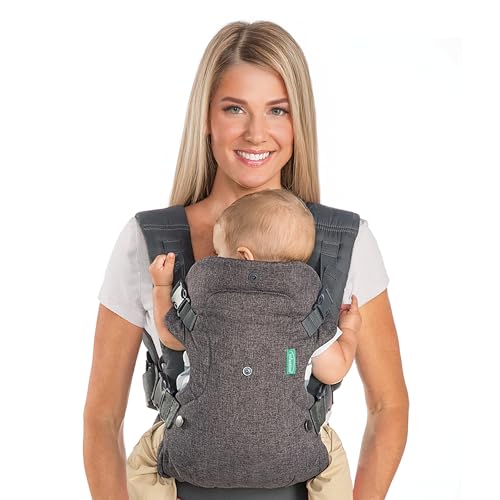 Infantino Flip 4-in-1 Baby Carrier Convertible Ergonomic13.9 x 20.44 x 0.47 Inch10.2 x 10.2 x 4.3 inchesCheck on Amazon
 Best for Long WalksMomcozy Baby Carrier with Hip Seat45 Inch14.2 x 5.9 x 5.3 inches1.7 PoundsCheck on Amazon
The best front facing infant carrier is the BabyBjörn Baby Carrier One if you want a clearly published outward-facing rule, and the Ergobaby Omni is the runner-up for a four-position carrier that stays comfortable as your baby grows. Both only face out once your baby is ready: BabyBjörn gives a minimum of 5 months and a 26 lb outward-facing limit for its Carrier One, and most manufacturers tie the position to head control and weight rather than a birthday.
This guide is research-based. We did not personally use these products. We compared manufacturer manuals and spec pages, retailer listings and independent reviews, and we write “not listed” where a figure could not be confirmed. Facing outward is a position, not a milestone to hurry. Sources disagree on how much it matters for hips, and babywearing educators commonly suggest keeping babies facing in for the early months. Ask your pediatrician if your baby has any hip, tone or development concern before you use an outward-facing position.

MOMTORY Safety-Certified 6-in-1 Baby Carrier Newborn to Toddler, Black | Plus Size Friendly, 6 Carry Positions, Ergonomic Hip Support, Cozy Baby Carrier with Hipseat for 7-50lbs, All Seasons
Chosen because it specifies Black and Plus Size Friendly.
View on AmazonInfantino Flip 4-in-1 Baby Carrier Convertible Ergonomic, Gray | Grows with baby from 8-32 lbs. Adjustable fit. Ergonomic hands-free carrying for everyday adventures. Registry Gift
Chosen because it specifies Gray.
View on AmazonMomcozy Baby Carrier with Hip Seat, 2-in-1 Forward-Facing Carry for Long Walks, Detachable Hands-Free Infant Carrier 7-44lbs, All Seasons Toddler Carrier Fits Waist Sizes up to 45 Inches, Black
Chosen because it specifies 2-in-1 Forward-Facing Carry for Long Walks and Detachable Hands-Free Infant Carrier 7-44lbs.
View on Amazon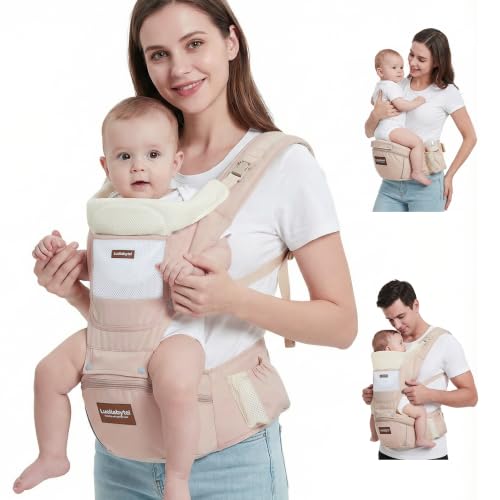
Baby Carrier with Hip Seat, 6-in-1 Newborn to Toddler, Khaki | Detachable hip seat, Adjustable shoulder straps, Wide waistbelt, M-shaped seat, Breathable fabric, All season
Chosen because it specifies 6-in-1 Newborn to Toddler and Khaki.
View on AmazonTop Picks at a Glance
- Best Overall: BabyBjörn Baby Carrier One. Clear rule: facing out from 5 months, up to 26 lb in that position, 8 to 33 lb overall.
- Best Four-Position Carrier: Ergobaby Omni. Front in, front out, hip and back, newborn to 48 months per the listing.
- Best Premium Mesh: BabyBjörn Baby Carrier Harmony. 3D mesh, 7 to 40 lb, outward-facing capped at 26 lb in the manual.
- Best Value: Infantino Flip Luxe. Four positions, listed 7 to 35 lb, budget tier.
- Best Convertible Cotton: Beco Gemini. 7 to 35 lb, four positions, 100% cotton versions.
- Best for Long Walks: Momcozy Baby Carrier with Hip Seat. 7 to 44 lb, forward-facing option for older babies, waist up to 45 in.
Quick Comparison Table
| Product | Best for | Key specs (as published) | Watch for | Price tier |
|---|---|---|---|---|
| BabyBjörn Baby Carrier One | Clear outward-facing rules | 8 to 33 lb; facing out from 5 months, max 26 lb out; four positions | Back carry recommended only after 12 months | Premium |
| Ergobaby Omni | One carrier for years | Newborn to 48 months; four positions; Omni Breeze family rated 7 to 45 lb | Outward limits listed by weight and height, so read the manual | Premium |
| BabyBjörn Harmony | Warm weather, 3D mesh | 7 to 40 lb; outward max 26 lb; about 1.5 to 1.9 lb carrier | Premium price | Premium |
| Infantino Flip Luxe | Budget convertible | 7 to 35 lb listed; four positions | Some listings show the older 8 to 32 lb header | Budget |
| Beco Gemini | Cotton convertible | 7 to 35 lb; front in, front out, hip, back; no insert needed | No official minimum age for facing out | Mid-range |
| Momcozy Hip Seat Carrier | Long walks with heavier babies | 7 to 44 lb; waist up to 45 in; detachable hip seat | Forward-facing aimed at babies over about 5 months | Mid-range |
Before You Buy: Is Your Baby Ready to Face Out?
Facing out puts the baby’s back against your chest and their face to the world. It is popular because babies like to look around, but it asks more of the baby than facing in. The baby needs steady head and neck control, the ability to turn away if overwhelmed, and a carrier that supports the thighs so the knees stay higher than the bottom instead of dangling.
The sources we reviewed give a consistent picture of the timing. BabyBjörn states that until around five months, babies should be carried facing in because their neck muscles, spine and hips are not yet developed enough, and it sets the minimum age for facing out at 5 months. A certified babywearing educator quoted by Let’s Talk Babywearing says most babies are not ready until about 5 to 6 months, though age alone does not decide readiness. Infantino, by contrast, ties its outward position to the baby being able to hold the head up unassisted and the weight range, with no stated month.
| Readiness check | What to look for |
|---|---|
| Head and neck control | Holds the head upright and steady without support, including when you move |
| Weight and size | Within the outward-facing range in the manual, such as up to 26 lb for BabyBjörn |
| Hip and leg position | Seat supports the thighs so the knees sit higher than the bottom |
| Temperament | Alert and comfortable; not already tired, hungry or overstimulated |
| Doctor guidance | No hip, tone or development concern flagged by your pediatrician |
Two points come up across sources. Sleeping babies should never be carried facing out, because a sleeping baby’s head can slump and compromise the airway. And outward-facing time should be short: several educators suggest limiting it to short stretches and turning the baby inward when they tire or become fussy.
On hips, the sources conflict. One source says the International Hip Dysplasia Institute recommends facing inward in the first six months of rapid hip development, while an older article quotes an IHDI specialist as saying facing either way is acceptable if the hips are properly supported. We could not reconcile the two, so the practical advice is the same: choose a carrier that supports the thighs, and talk to your pediatrician if hips are a concern.
1. BabyBjörn Baby Carrier One: Best Overall
- Overall range: from birth (at least 8 lb and 21 in) to about 3 years (up to 33 lb and 39 in).
- Facing out: minimum age 5 months, maximum 26 lb in that position.
- Positions: facing in (two heights), facing out, and back carry.
- Back carry: recommended only after 12 months.
- Small babies: leg straps should be used between 8 and 10 lb.
Best for: parents who want rules they can follow without interpretation. Skip if: you want a hip-carry position.
The Carrier One earns the top spot because the manufacturer’s outward-facing rule is explicit and conservative. Independent reviewers list a facing-out window of roughly 5 to 15 months, which fits how most babies actually use the position. BabyBjörn’s carrier has a narrow, structured panel and a head support that can be raised, and you can switch between facing in and out without removing the carrier. Because the listed window for facing out is limited, it is a carrier you will use for facing out for several months, not for years.
Pros: clear published limits; conservative approach; adjustable head support; four positions. Cons: premium cost; no hip carry; outward weight cap of 26 lb.
2. Ergobaby Omni: Best Four-Position Carrier
- Age range: newborn to 48 months on the listing.
- Positions: front inward, front outward, hip and back.
- Weight: the Omni Breeze family is rated 7 to 45 lb in published specs; confirm the range printed on your version.
- Outward-facing: one retailer lists a 14 lb and 25 in minimum, with a 30 lb maximum in that position; we did not find an official minimum age, so read the manual.
- Newborn use: no insert needed for a baby of at least 7 lb.
Best for: families who want to use the same carrier from the newborn stage to the toddler stage. Skip if: you want the most prescriptive outward-facing rule.
The Omni’s selling point is range. Its mesh Classic and Deluxe versions are breathable, and the cotton and linen versions suit cooler weather. Because Ergobaby uses weight and height for outward-facing instead of a stated month, the limits you rely on should come from the label and manual on your carrier. A good habit is to confirm head control first, then check the weight and height guide.
Pros: long lifespan; four positions; several fabric options. Cons: premium price; several versions with different figures; no firm month rule.
3. BabyBjörn Baby Carrier Harmony: Best Premium Mesh
- Weight range: 7 to 40 lb in the manual and most retailers (one review lists 33 lb).
- Outward-facing cap: 26 lb according to the owner’s manual.
- Positions: front inward, front outward and back carry.
- Fabric: 3D mesh, reported as 100% polyester.
- Weight: about 1.5 to 1.9 lb.
Best for: warm climates and parents who want a lighter-feeling panel. Skip if: you prefer cotton.
The Harmony shares the BabyBjörn approach to outward-facing: it is a position for babies who can hold the head steady, with a lower weight cap than the carrier’s overall limit. Sources we found did not give a separate minimum age for outward-facing in the Harmony, so follow BabyBjörn’s general guidance of around five months and check the manual.
Pros: breathable; light; clear outward cap. Cons: premium cost; minimum outward age not stated in our sources.
4. Infantino Flip Luxe: Best Value Convertible
- Weight range: 7 to 35 lb as Infantino describes the Luxe; the older Flip lists 8 to 32 lb.
- Positions: four, including facing in, facing out and back carry.
- Outward-facing: the Flip gate is head control, not a set age, with a top weight of 32 lb on the older model.
Best for: shoppers who want a lower-cost carrier with a forward-facing position. Skip if: you want a prescriptive month rule.
Infantino’s approach is weight and development. The manual tells you to make sure the baby meets the weight and developmental requirements for each position, so you decide readiness. Because the instructions are less specific than BabyBjörn’s, a conservative approach is to wait until your baby is at least five months old and holds the head steady for the whole carry.
Pros: budget; four positions; wide weight range. Cons: less prescriptive; listing inconsistency between old and new models.
5. Beco Gemini: Best Convertible Cotton
- Weight range: 7 to 35 lb.
- Positions: front inward, front outward, hip and back.
- Seat: convertible, so no infant insert is required.
- Fabric: 100% cotton on several versions; a mesh panel version also exists.
Best for: parents who like cotton fabric and a seat that adjusts as the baby grows. Skip if: you need an official month rule for facing out.
Beco’s published limits are by weight. One independent review notes that the narrow seat setting suits older babies facing out, while the wider setting is for facing in. We found no official minimum age for outward-facing, so check the manual and use the five-month guidance from other makers as a conservative reference.
Pros: convertible seat; cotton; four positions. Cons: no stated outward minimum age; mid-range price.
6. Momcozy Baby Carrier with Hip Seat: Best for Long Walks
- Weight range: 7 to 44 lb.
- Waist: up to about 45 in on most listings (47 in on one retailer); a version with an extender reaches 59 in.
- Positions: hip seat (cradle, hip, forward-facing) and carrier positions including facing in and out and back carry.
- Age guidance: for babies under 5 months, the cradle position is recommended; forward-facing is for babies over about 5 months.
- Weight of carrier: about 1.7 lb.
Best for: parents who want a detachable seat to take weight off the shoulders on longer walks. Skip if: you want a single, compact panel.
The hip seat is the distinguishing feature. It takes some of the baby’s weight, so the straps do less work. Momcozy’s own guidance puts forward-facing at over 5 months, in line with other makers. Listings vary on the waist size limit, so check the figure for your version, particularly if you need the extender.
Pros: detachable seat; wide weight range; lighter on the shoulders. Cons: more parts; waist figures vary by listing.
Also Consider
MOMTORY Safety-Certified 6-in-1 Baby Carrier
A newborn-to-toddler carrier with six carry positions and a plus-size friendly listing. Its weight range was not listed in the sources we reviewed, so check the label.
Beco 8
A mesh hybrid listed from 7 to 45 lb with front in, front out, hip and back positions. It includes a removable infant insert, which adds a step for newborns.
Infantino Flip 4-in-1
The lower-cost original, listed at 8 to 32 lb. It is a fit for babies already above 8 lb who are ready for a forward-facing position.
How We Chose
We kept front carriers that offer a forward-facing position and publish a weight range. We compared manufacturer manuals, product pages and retailer listings, and read independent guides on outward-facing readiness, including babywearing educator advice and hip-health discussions. We did not personally use these products. We did not rank by price; tier words describe a general bracket. Where sources disagreed, for example on Ergobaby’s outward limits or IHDI guidance, we reported both and recommended following the manual.
Buying Guide
Look for thigh support
The seat should support the baby from knee to knee, with the knees higher than the bottom. If the legs dangle straight down, the carrier is not a good fit for the position. Carriers with a narrow seat setting for facing out usually do this better than those that rely on a single width.
Check the outward weight cap
Many carriers cap the outward position below the overall limit, such as 26 lb for BabyBjörn. A 30 lb baby may be within the carrier’s overall range but outside the outward range.
Choose breathable fabric if you live in a warm place
Facing out exposes the baby to air and sun but also traps heat behind the baby’s back against your chest. Mesh helps, and shade matters more.
Plan for short outward sessions
Several educators suggest limiting facing-out time to short stretches, since babies can become overstimulated. Turn the baby inward when they become fussy, sleepy or tired.
Think about the wearer
A 25 lb baby facing out puts weight further from your body than facing in. A hip seat or a good waistband helps, and a carrier with a wide waist range helps if two adults share.
Common Mistakes to Avoid
- Facing out before the baby has solid head control.
- Letting a baby fall asleep while facing out.
- Ignoring the outward weight cap, which is lower than the overall limit.
- Using a carrier where the legs dangle with the knees below the bottom.
- Keeping the baby facing out for long periods when they are tired or overstimulated.
How Long Will the Forward-Facing Window Last? A Worked Example
Outward-facing is a window, not a permanent mode, and that window is shorter than many shoppers expect. Take a baby who reaches 5 months at about 14 to 16 lb, which is typical for many babies but not all, and gains roughly 1 lb a month after that. With a 26 lb outward cap, as on the BabyBjörn Baby Carrier One and the Harmony, the baby reaches the limit about 10 months after the 5-month mark, so the position can last until around 12 to 15 months for an average-growth baby and sooner for a bigger one. BabyGearLab lists the facing-out window of the Carrier One as roughly 5 to 15 months.
| Carrier | Outward cap | Approx. months of outward use if started at 5 months and 15 lb | Then what |
|---|---|---|---|
| BabyBjörn Carrier One | 26 lb | About 10 months | Switch to facing in or back carry after 12 months |
| BabyBjörn Harmony | 26 lb | About 10 months | Facing in up to 40 lb, back carry |
| Infantino Flip (older model) | 32 lb | About 14 months | Back carry or facing in |
| Ergobaby Omni (one retailer figure) | 30 lb | About 12 to 15 months | Hip or back carry, facing in to 45 lb |
| Momcozy Hip Seat Carrier | Within 44 lb overall | Not listed separately | Hip seat or facing in |
These are planning estimates, not promises. Babies grow at different rates, and a baby who is heavy for their age may reach the cap sooner. The practical point is that if facing out is the main reason you are buying, you will probably use it for less than a year, so weigh that against the carrier’s price and its other positions.
Decision Matrix: Match Your Situation to a Carrier
| Your situation | Best match | Why |
|---|---|---|
| You want rules you can follow without interpreting | BabyBjörn Baby Carrier One | Stated 5-month minimum and 26 lb outward cap |
| You want one carrier from newborn to toddler | Ergobaby Omni or BabyBjörn Harmony | Wide weight range and several positions |
| You live in a warm climate | BabyBjörn Harmony or Ergobaby Omni mesh | Breathable mesh panels |
| You are on a budget | Infantino Flip Luxe | Lowest cost with a forward-facing position |
| You prefer cotton and a convertible seat | Beco Gemini | Cotton fabric and a seat that adjusts for age |
| You walk long distances with a heavier baby | Momcozy Hip Seat Carrier | Detachable seat shares the load |
How to Switch Your Baby to Facing Out: Step by Step
If your carrier allows changing positions without removing the baby, as the Carrier One does, follow the maker’s instructions. If you must take the baby out, it is safer to do it seated. The common pattern looks like this.
- Check readiness. Confirm head control, weight and your baby’s mood. Skip it if the baby is tired or hungry.
- Adjust the seat. Switch the seat to the narrower setting if your carrier has one, so the baby’s thighs are supported from knee to knee.
- Remove the head support if the manual says so. Some carriers need the head support lowered for the outward position; others use a different method.
- Place the baby facing out. Hold the baby against your chest with a hand under the bottom and the other supporting the back, then lower the baby into the panel facing outward.
- Tighten the straps. The baby should be snug against your chest, high enough that the head is clear of the panel edge. Check that the legs are in an M shape with knees higher than the bottom.
- Watch your baby. After a few minutes, check for signs of overstimulation. If the baby turns away, fusses or tenses, turn the baby inward.
Practice sitting down first, and have another adult nearby the first few times. Do not use the outward position while cooking, driving or doing anything that could injure the baby.
Care and What Wears First
Carriers used outward-facing see wear on the leg openings and on the panel edges where the baby’s legs and thighs rub. Check the stitching on the panel and the buckles regularly, wipe mesh and cotton panels after spills, and wash according to the care label. Avoid fabric softener, which can reduce the grip of straps and buckles. If you notice fraying, loose stitching or a buckle that does not lock cleanly, stop using the carrier and contact the maker.
Frequently Asked Questions
What is the best front facing infant carrier?
The BabyBjörn Baby Carrier One is the best overall for its clear outward-facing rules, and the Ergobaby Omni is the best for a carrier that lasts into toddlerhood.
When can a baby face forward in a carrier?
BabyBjörn says from 5 months, and many babywearing educators suggest 5 to 6 months once the baby has steady head control. Some makers use head control and weight instead of an age. Follow your carrier’s manual and your pediatrician’s advice.
Is forward facing bad for a baby’s hips?
Sources disagree. Some experts say the key is thigh support, with the knees higher than the bottom, while others recommend facing inward for the first six months. Ask your pediatrician if hips are a concern.
Can a baby sleep while facing out?
No. Sources agree a sleeping baby should be turned inward, because the head can slump and affect the airway.
How long can a baby face out?
There is no universal limit, but educators suggest short sessions and turning the baby inward when they become fussy or tired.
Is facing out overstimulating?
It can be, because the baby cannot turn into your chest. Watch for fussiness, turning the head away or tensing, and switch to facing in.
What if my baby never likes facing out?
That is fine. Many babies prefer facing in, and you can use a hip or back carry later instead.
Which One Should You Buy?
Buy the BabyBjörn Baby Carrier One if you want the clearest rules, the Ergobaby Omni for a carrier that lasts, the Harmony for warm weather, the Infantino Flip Luxe for a budget convertible, the Beco Gemini for cotton and a convertible seat, or the Momcozy hip seat carrier for longer walks with a heavier baby.
Sources
- BabyBjörn Baby Carrier One and Harmony product pages and owner’s manuals
- Ergobaby Omni product pages
- Infantino Flip and Flip Luxe product pages and manual
- Beco Gemini product information
- Momcozy hip seat carrier product pages
- Let’s Talk Babywearing and International Hip Dysplasia Institute guidance
Last updated: October 2026