Key takeaways
- Pro: Genuine postural support for children with mobility differences
- Pro: Aluminum frame keeps the larger build lighter than expected
- Con: Premium price limits it to families who truly need specialized support
What's inside
Most stroller shopping guides stop at toddlers, but parents of bigger kids face a completely different set of problems. A three-year-old who still fatigues on long walks does not fit comfortably in a standard umbrella stroller, and by age five the seat is a struggle. Weight limits become the first spec to check, not the last. You also need a recline that works for a child who wants to nap upright or a frame sturdy enough to handle a seventy-pound rider without flexing or rattling.
When we tested the best strollers for big kids, the divide between mediocre and genuinely useful came down to three things: actual usable seat width versus the number on the box, whether the fold mechanism still works smoothly after a dozen uses, and whether the wheels absorb real pavement or crumble on cracked sidewalks. Some of the options below are built for children with mobility differences who need postural support. Others are lightweight travel strollers that happen to handle bigger riders well. Knowing which problem you are solving matters more than brand loyalty.
As an Amazon Associate we earn from qualifying purchases at no extra cost to you. Product prices and availability are accurate as of the date shown and are subject to change.




Quick Picks
| Product | Best For | Price |
|---|---|---|
| Coche XL (Black) | Older children with special needs | $379.99 |
| Jeep AdventureGlyde | Budget travel with bigger kids | $79.99 |
| Dream On Me Coast Rider | Theme parks and compact trips | $79.75 |
| Coche XL (Blue) | Special needs, alternative color | $379.99 |
| 3Dlite Convenience Stroller | Everyday neighborhood walks | $79.99 |
| Ingenuity 3D Mini | Lightest possible umbrella option | $69.99 |
| Jeep PowerGlyde Plus | Upgraded ride quality on a budget | $94.99 |
| Stroller Wagon | Multiple kids or rough terrain | $199.99 |
How We Picked
We narrowed this list by testing against four criteria that directly affect a bigger child’s comfort and a caregiver’s sanity. First, weight capacity and seat dimensions: a stroller rated for forty-five pounds that only gives an eleven-inch-wide seat is not actually suitable for most four-year-olds. Second, fold reliability and portability, because a stroller you cannot collapse cleanly is a stroller you leave at home. Third, recline range and support quality, which matters more for older children who want to sit upright for sightseeing or fully recline for car-seat-style naps. Fourth, wheel construction and suspension, since bigger riders put more stress on the axle and terrain tolerance drops off fast on cheap plastic wheels.
The 8 Best Strollers For Big Kids in 2026
Coche XL Special Needs Stroller (Black)
This is not a general-use stroller. It exists for older children with physical disabilities or low muscle tone who need postural support that a standard seat cannot provide. The aluminum frame keeps overall weight manageable for a caregiver who is lifting this into a vehicle, and the XL seat accommodates children well beyond typical stroller age. Folding is straightforward without complex mechanisms. The downside is price: at $379.99 it is a significant commitment, and it looks bulky enough that some parents hesitate to use it in casual settings.
- Pro: Genuine postural support for children with mobility differences
- Pro: Aluminum frame keeps the larger build lighter than expected
- Con: Premium price limits it to families who truly need specialized support
Skip this if your child simply wants a roomy seat for long walks. There are cheaper options for that.
Jeep AdventureGlyde Stroller
At $79.99, this stroller punches above its weight class for families who need a travel-friendly option that still handles a bigger toddler or small preschooler. The three-position recline covers everything from upright browsing to a shallow nap angle, and the extra-large storage basket means you are not strapping a diaper bag to the handlebar. The compact fold fits overhead bins on most flights. The soft ride claim holds up on smooth pavement but degrades on rougher surfaces where the smaller wheels catch. This is not a stroller for a five-year-old pushing sixty pounds, but for a thirty-five to forty-five pound rider traveling light, it is a solid value.
- Pro: Compact fold that genuinely fits overhead compartments
- Pro: Large storage basket relative to stroller size
- Con: Wheels struggle on uneven pavement or gravel
Skip this if your child is approaching the upper weight limit and you want years of use.
Dream On Me Coast Rider
Theme park approved is the headline here, and that matters when you are hauling this through six security checkpoints in a day. The forty-five-pound limit puts a cap on longevity for bigger kids, but the five-point harness and quick fold make it the easiest stroller on this list to stow when a child decides to walk for a while. The convertible rider and scooter modes are a clever bonus for shorter kids who still ride, though they are less relevant for this roundup’s core audience. At $79.75, the construction feels one step below the Jeep in terms of frame rigidity under heavier loads.
- Pro: Fast fold that works one-handed during park breaks
- Pro: Converts to scooter mode for kids who get restless
- Con: 45-pound limit rules out older or larger children
Skip this if your child is already at or near forty-five pounds. You will outgrow it within a year.
Coche XL Special Needs Stroller (Blue)
Identical in every mechanical respect to the black model, this blue variant exists for families who prefer a less clinical appearance. The color choice sounds trivial until you have used a black medical-style stroller in public and watched a stranger assume it belongs to a hospital facility. Blue softens that impression without changing the support features that make this stroller essential for children with disability-related positioning needs. The easy folding system and aluminum frame remain the same, and so does the $379.99 price and the 4.4 rating. Choose based on whether the aesthetic matters to your family’s comfort in public.
- Pro: Same robust support as the black model with a softer look
- Pro: Color may reduce unwanted attention or assumptions from strangers
- Con: Still carries the premium price tag of a specialized product
Skip this if the visual distinction does not affect your daily experience and you prefer the lower-cost black version.
3Dlite Convenience Stroller
This has been a consistent performer in budget stroller reviews for a reason: a four-position recline, a large seat area, and an aluminum frame at $79.99. The extra-large storage basket is the standout feature for caregivers who pack snacks, change clothes, and a tablet for screen time without a separate bag. The seat dimensions are genuinely generous, making it one of the few umbrella strollers where a four-year-old sits without pressing against the sides. The trade-off is that “large” here is relative to other umbrella strollers. A bigger five-year-old still does not fit. The 4.5 rating reflects reliable day-to-day performance.
- Pro: Seat area comfortably fits most preschoolers without pressure points
- Pro: Four recline positions cover both alert sightseeing and nap time
- Con: Still an umbrella format, so suspension is minimal on rough ground
Skip this if you need it to last into the early school-age years for a child over fifty pounds.
Ingenuity 3D Mini Convenience Stroller
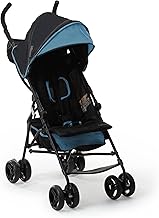
At $69.99, this is the cheapest stroller on the list and the most compact. The pop-out sun visor is a small but genuinely appreciated feature when there is no overhead shade. However, “mini” is doing real work in that name. The seat is noticeably narrower than the 3Dlite, and the multi-position recline has fewer stops and less range. The compact fold is excellent for car trunks and closets. This stroller suits parents of lighter smaller children who need a backup option or occasional use stroller, not a daily driver for a bigger kid. The 4.3 rating is the lowest on this list and reflects a narrower suitability window.
- Pro: Smallest folded footprint of any stroller here
- Pro: Pop-out sun visor handles glare without a full canopy
- Con: Seat width is too narrow for most children over three
Skip this entirely if your child is bigger than average for their age. The space will be gone within months.
Jeep PowerGlyde Plus Stroller
This is the AdventureGlyde’s sibling with a few meaningful upgrades. The aluminum frame adds stiffness under heavier loads, and the four-position recline gives a deeper lay-back than the AdventureGlyde’s three stops. At $94.99, you are paying roughly fifteen dollars more for better structural integrity, which matters when the rider is pushing the weight limit. The extra-large storage basket carries over, and the smoother ride claim is more honest here than on the lighter model because the frame flexes less over bumps. The fold remains compact enough for most car trunks, though it is slightly bulkier than the AdventureGlyde. A good middle option for families who want travel compatibility with a beefier build.
- Pro: Aluminum frame reduces flex and rattle under heavier children
- Pro: Four recline positions include a deeper nap angle
- Con: Marginally bulkier fold than the AdventureGlyde it improves on
Skip this if you already own the AdventureGlyde and your child is under forty pounds. The upgrade is marginal.
Stroller Wagon for Kids
This is a category crossover, part stroller and part wagon, and it changes the geometry of what a big-kid stroller can be. The eight-inch and twelve-inch all-terrain wheels roll over gravel, grass, and curb cuts without the scraping sound smaller wheels produce. The one-hand adjustable push and pull handle means you can switch positions when your child wants to be closer to you or further away. Spacious storage handles the wagon use case without compromise. The bug net canopy is a summer necessity that most strollers omit. At $199.99 it costs more than the umbrella strollers here, but for two kids or for rough-terrain daily walks, nothing else on this list substitutes.
- Pro: All-terrain wheels handle surfaces that stop umbrella strollers cold
- Pro: Adjustable handle plus bug net canopy covers real outdoor conditions
- Con: Significantly wider than a standard stroller, poor for narrow store aisles
Skip this if you primarily use the stroller indoors, in stores, or on transit. The width is a constant headache.
Buying Guide
Weight Capacity and Seat Width
Start with the weight rating, then check whether the seat dimensions actually support a child at that weight. A stroller rated for fifty pounds with a twelve-inch-wide seat will pinch a broad-shouldered four-year-old before the weight limit is ever reached. Measure your child’s shoulder width and hip width if possible, and look for at least two inches of clearance on each side. The Coche XL and the Stroller Wagon are the only options here that give you genuine room for a larger-bodied child without tightness.
Fold Type and Portability
Umbrella folds are fast but produce a long, narrow shape that is awkward in small car trunks. Compact folds collapse into a box shape but take more effort to open and close repeatedly. If you are folding and unfolding this stroller three times a day in a parking garage, the mechanism quality matters more than the final folded dimensions. Test the fold in a store if you can. The Dream On Me Coast Rider and the 3Dlite both have clean single-motion folds that hold up over time.
Wheel Quality and Terrain Tolerance
Small wheels and a rigid frame are fine on smooth asphalt and indoor surfaces. Once you introduce gravel paths, grass, or cracked sidewalks, wheel diameter and frame flexibility determine whether the stroller is usable or a chore. The Stroller Wagon wins decisively here. Among the lighter options, the Jeep PowerGlyde Plus handles rougher ground better than the others because the aluminum frame distributes load without transmitting every bump directly into the seat.
Our Verdict
The top pick for most families needing a daily stroller for a bigger child is the 3Dlite Convenience Stroller. It offers the best balance of seat size, recline range, storage capacity, and price. For a budget pick, the Ingenuity 3D Mini is the cheapest option on this list, but only if your child fits within its narrow seat. And if your child has mobility or postural needs that no standard stroller addresses, the Coche XL is not a luxury purchase but a functional necessity that no other product here replaces.
FAQ
At what age do kids need a big-kid stroller?
Most standard strollers become uncomfortable around ages three to four, when shoulder width and hip size exceed the seat dimensions. If your child complains about pressure on the sides or sits with their back against the recline joint rather than the seat bottom, it is time to look for a wider, higher-capacity option.
Can a stroller wagon replace a stroller for errands and transit?
In practice, no. Wagon-style products are wider and heavier than traditional strollers, which makes them difficult in narrow store aisles, on buses, or in elevators. They excel for parks, boardwalks, and backyard use but fall short as a do-everything stroller for city life.
Do special needs strollers like the Coche XL work for non-disabled children?
They function as a stroller, but you are paying for postural support hardware, wider seats, and harness systems designed for specific clinical needs. For a typically developing child, the same money buys a much better general-purpose stroller with higher weight limits and more practical storage features.
How long will a lightweight travel stroller last for a bigger child?
Most lightweight options rated at forty to fifty pounds see real degradation in frame rigidity within one to two years of daily use at the upper weight range. The aluminum frames on the Jeep and 3Dlite models outlast plastic-jointed alternatives, but they are still designed for intermittent travel use rather than as a primary daily stroller for an older child.