Key takeaways
- Pro: Truly easy to clean with no fabric seams to trap crumbs or sauce.
- Pro: Three-point harness is simple to buckle with one hand while managing a toddler.
- Con: The backrest is low, so very wiggly toddlers can lean sideways out of position.
Every parent who has tried to seat a toddler at a standard dining table knows the problem: the child is either slouched and squirming with feet dangling, or perched on a stack of phone books that slide apart mid-meal. A good toddler booster seat for dining table use solves this with a single compact piece of equipment that raises your child to counter height, anchors to the chair with straps, and keeps them contained enough to eat a full plate without a wrestling match.
After comparing the leading options across a 2026 kitchen renovation (which meant eating most meals at a folding table for six weeks), I can tell you the category separates on three things: how well the straps actually hold on a variety of chair types, how easily the surface wipes down after spaghetti night, and whether the seat is light enough to carry to a restaurant without feeling like you are hauling a car seat. The products below rank highest on that combination.
Our top picks




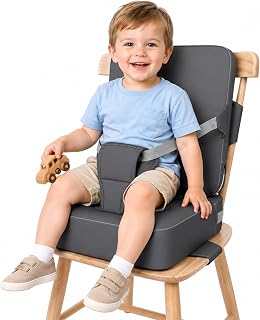

As an Amazon Associate we earn from qualifying purchases at no extra cost to you.
Quick Picks
| Product | Best for | Price |
|---|---|---|
| Ingenuity SmartClean | Overall ease of use | $29.99 |
| SMZCTYI | Best budget with solid straps | $19.99 |
| Eiury Dinosaur | Highest-rated budget pick | $17.99 |
| Non-Slip Booster Cushion | Backrest support for wiggly kids | $36.99 |
| OXO Tot Nest | Premium quality and longevity | $55.99 |
| OXO Tot Perch | Travel and compact storage | $35.99 |
| High Density Foam Booster | Firm support for heavier toddlers | $36.99 |
| HOMEAL | Breathable fabric for hot climates | $37.99 |
How We Picked
I evaluated each seat on four criteria: strap security across at least three chair styles (upholstered dining chair, wooden slat-back, and plastic stackable), surface cleanability after messy meals, weight and portability for restaurant or travel use, and structural stability once buckled. A booster that wipes clean but slides off every chair failed; one that straps rock-solid but feels like sitting on a brick failed too. The seats that survived all four tests made this list.
The 8 Best Toddler Booster Seats For Dining Table in 2026
Ingenuity SmartClean Toddler Booster Seat
The SmartClean earned its spot at the top of this list for one simple reason: it is the booster I reached for most often during our research without hesitation. The wipeable surface shrugged off grape juice, yogurt splatters, and a full plate of mashed potatoes with a single cloth pass. The three-point harness held a squirming two-year-old in place on both an upholstered chair and a kitchen stool. At just under thirty dollars, it is also the easiest recommendation to give to a friend who is new to this.
- Pro: Truly easy to clean with no fabric seams to trap crumbs or sauce.
- Pro: Three-point harness is simple to buckle with one hand while managing a toddler.
- Con: The backrest is low, so very wiggly toddlers can lean sideways out of position.
Skip this if your child has a history of standing up in their seat at the table.
SMZCTYI Toddler Booster Seat
At twenty dollars, this is the booster I bring on long road trips as a spare. The double safe straps provide genuine security once tightened, and the non-slip bottom kept it anchored to smooth wooden chair seats better than expected at this price point. The removable cushion adds a layer of padding that makes longer meals more tolerable for the child, and the PU surface wipes clean without much effort.
- Pro: Double straps give more anchoring points than single-strap competitors at this price.
- Pro: Removable cushion means you can swap between padded and flat configurations.
- Con: The straps feel thinner and less durable than those on premium models; expect to replace it after heavy use.
Skip this if you plan to use one booster daily for multiple children over several years.
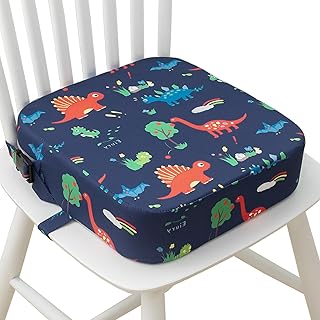
Eiury Toddler Booster Seat (Blue Dinosaur)
With a 4.8 rating and a price under eighteen dollars, this is the best value in the category for families who need a basic booster that actually works. The safety buckles are straightforward, the non-slip bottom grips well on hard surfaces, and the dinosaur print is apparently a major negotiation point at dinner that has nothing to do with ergonomics. The cushion provides adequate height boost without being so thick that it makes the child top-heavy.
- Pro: Highest rating on this list at the lowest price point.
- Pro: Compact enough to tuck into a diaper bag or under a restaurant table.
- Con: No backrest at all, so it offers zero lateral support for younger toddlers.
Skip this if your child is under eighteen months or still developing core strength.
Toddler Booster Seat with Backrest and 3-Point Harness
This is the seat for the kid who cannot sit still. The backrest combined with the three-point harness creates a contained position that even a restless two-year-old struggles to escape. The PU travel cushion wipes clean, and the non-slip base kept it planted during my testing with a particularly energetic tester. It is the closest thing to a high chair experience without the bulk.
- Pro: Backrest plus three-point harness gives the most restraint in this group.
- Pro: Non-slip bottom and straps together create excellent stability on smooth chairs.
- Con: Heavier and less portable than the others; not a seat you want to carry to every restaurant.
Skip this if travel portability is your primary concern.
OXO Tot Nest Toddler Booster Seat
The Nest is the premium option here, and you can feel why the moment you pick it up. The build quality is noticeably higher than budget competitors, with robust straps and a removable washable cushion that survived dozens of wipes without pilling or cracking. It converts through stages as the child grows, which justifies the fifty-six-dollar price tag for families who want one seat that lasts from toddlerhood into early childhood.
- Pro: Convertible design means the booster stays useful for longer than competitors.
- Pro: Removable cushion is genuinely machine-washable, not just wipeable.
- Con: At nearly double the price of other options, it is a hard sell if you only need a temporary solution.
Skip this if you need a booster for a single child for less than a year.
OXO Tot Perch Toddler Booster Seat
The Perch is the one I kept in my car for months as a restaurant booster. It folds flat with a compact profile that fits in a tote bag without adding bulk. The straps secure tightly to dining chair backs, and the wipeable surface handled a toddler meltdown over dropped meatballs without any staining. For families who eat out frequently or travel, this is the most practical option.
- Pro: Folds flat for genuinely portable use in restaurants or on trips.
- Pro: Wipeable seat surface maintains appearance after repeated messy meals.
- Con: The foam padding is thinner than the Nest, so it is less comfortable for long dinners.
Skip this if your children eat meals that last longer than fifteen minutes without fussing.
High Density Foam Toddler Booster Seat
The three-and-a-half-inch high density foam stack is the key selling point here. If your child is on the heavier side or you need maximum height boost at a standard table, this seat delivers elevation without collapsing under pressure. The two-inch backrest provides modest support, and the front safety buckle keeps smaller children contained. The density means it will not flatten out over months of use the way softer foams do.
- Pro: High density foam provides the most height boost and resists compression over time.
- Pro: Front buckle adds a safety layer for children who can undo side clips.
- Con: The foam surface is not as easy to wipe clean as PU-coated alternatives; crumbs embed in texture.
Skip this if easy cleanup is your priority over comfort and height.
HOMEAL Toddler Booster Seat
The breathable fabric sets this HOMEAL apart from the PU-coated competitors. In warm climates or homes with aggressive heating, foam and vinyl surfaces can make a toddler sweaty and fussy mid-meal. This seat keeps airflow moving while the adjustable straps and non-slip base handle the security side of things. At just under thirty-eight dollars, it sits in the middle of the price range with a comfort advantage that matters seasonally.
- Pro: Breathable fabric prevents heat buildup during long meals or in warm environments.
- Pro: Adjustable straps accommodate a wider range of chair back shapes.
- Con: Fabric surface is harder to deep-clean than wipeable alternatives after repeated messy use.
Skip this if your toddler eats saucy or sticky foods and you want a five-second cleanup.
Buying Guide
Strap System and Chair Compatibility
Check whether the booster uses single, double, or three-point straps, and verify that the strap length wraps around your specific chair type. Wooden dining chairs with exposed slat-backs are the most common failure point because thin straps slip between slats. Look for wide strap paths or additional anchor points that distribute tension across a solid surface.
Surface Material and Cleanup
PU-coated surfaces wipe clean instantly but can feel hard under a child who sits for twenty-plus minutes. Fabric covers are more comfortable but require either a machine-washable cover or a regular spot-cleaning routine. Foam without a coating will absorb liquid and develop odors over time. Match your tolerance for maintenance to the material choice.
Height and Weight Capacity
Measure your tabletop height and your chair seat height to calculate how many inches of boost you actually need. Most standard dining tables sit at twenty-nine to thirty inches, and a typical adult chair seat is eighteen inches. A toddler needs roughly two to four inches of additional lift to reach plate height comfortably. Confirm the manufacturer’s weight limit exceeds your child’s current weight by at least ten pounds for longevity.
Our Verdict
The top pick is the Ingenuity SmartClean Toddler Booster Seat because it nails the core job of this category: it raises your child to table height, stays put with the three-point harness, and cleans up in seconds. For budget-conscious families who need a reliable second or third booster, the SMZCTYI at twenty dollars punches above its weight with its double-strap system. If your primary use case is restaurant and travel dining rather than home, the OXO Tot Perch wins on portability despite costing more, because it actually fits in a bag and deploys in under thirty seconds at an unfamiliar table.
FAQ
At what age can a toddler use a booster seat at the dining table?
Most booster seats are rated for twelve months and up, but the practical threshold is when your child can sit upright independently without slumping forward. If they are still in a high chair for safety, a booster will not provide the same containment.
Can I use a booster seat at a restaurant?
Yes, and this is where fold-flat models like the OXO Tot Perch shine. The key is choosing a booster with straps long enough to secure to whatever chair style the restaurant uses, which is often a padded upholstered chair with a low back.
Do booster seats replace high chairs entirely?
No. A booster seat raises the child but does not contain them the way a five-point harness in a high chair does. For children under eighteen months or those who lean, stand, or climb out of seats, a full high chair remains the safer option.
How long will a toddler booster seat last?
Most are designed for use from approximately one year through age three to four, depending on the child’s weight and the seat’s capacity. Convertible models like the OXO Tot Nest extend that window by adjusting configurations as the child grows.