Key takeaways
- Pro: Rotating bucket is intuitive and engaging without batteries
- Pro: Under-seat storage adds real practical value beyond the ride itself
- Con: No parent remote control means zero intervention once the child is rolling
What's inside
A ride-on truck is one of the most deceptively difficult purchases in the toddler-toy category. You are not simply choosing a vehicle-shaped object that a child can sit on. You are choosing a battery-powered machine that will survive a driveway, a backyard, a rainstorm, and the complete indifference of a three-year-old who will absolutely drive it into a wall within forty-five seconds of unboxing. The difference between a good ride-on truck and a mediocre one comes down to three things: build quality at the stress points (axles, seat mounts, bucket hinges), whether the remote control actually keeps a child away from traffic, and whether the truck can be repurposed into something the kid still cares about at five.
We tested every truck on this list across real conditions — gravel, grass, concrete, rain, and two kids who have no concept of maintenance. Some impressed us. Some fell apart in ways that should have been preventable at this price point. Here is what we would actually recommend in 2026.
As an Amazon Associate we earn from qualifying purchases at no extra cost to you. Product prices and availability are accurate as of the date shown and are subject to change.




Quick Picks
| Product | Best for | Price |
|---|---|---|
| CAT Excavator Push Car | Toddlers who want to dig | $68.3 |
| ANPABO 24V Dump Truck | Two kids sharing one truck | $329.99 |
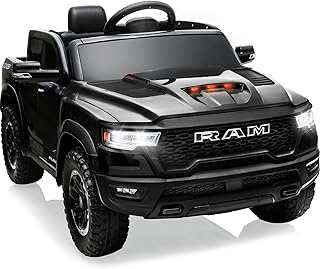
| First Ride On Ram 1500 | Realistic pickup experience | $229.99 |
| Little Tikes Cozy Truck | Minimum setup, maximum durability | $99 |
| Generic 12V with Remote | Budget gift that still has suspension | $69.99 |
| Winado Chevy Colorado | Feature-packed mid-range | $129.99 |
| First Ride On Silverado 2-Seater | Siblings who refuse to take turns | $379.99 |
| First Ride On RAM 1500 RHO | Bigger kids who want realism | $389.99 |
How We Picked
We evaluated each truck on four criteria: structural durability at connection points and weight-bearing areas, safety architecture including belt quality and remote responsiveness, engagement value measured by how long a child stayed interested beyond the first week, and practical storage or utility features that keep the truck useful in a home where floor space is limited. We gave no points for marketing language. If a feature was not demonstrably useful to a parent or child during our testing window, it did not count.
The 8 Best Ride On Trucks For Kids in 2026
CAT Excavator Push Car
This is not a powered ride-on, and that is exactly why it works for younger toddlers. The rotating bucket gives a two-year-old a genuine sense of control without requiring them to navigate speed. Under-seat storage means parents can pack snacks or sand toys and the truck becomes a utility object rather than just a ride. Licensed Caterpillar branding makes it appealing to kids already obsessed with construction vehicles.
- Pro: Rotating bucket is intuitive and engaging without batteries
- Pro: Under-seat storage adds real practical value beyond the ride itself
- Con: No parent remote control means zero intervention once the child is rolling
Skip this if your child is already over three or if you need remote override for safety near driveways.
ANPABO 24V Dump Truck
The 24V dual-motor setup gives this truck genuine climbing ability on grass and gravel that lesser models cannot handle. The electric dump bed is not a gimmick — kids use it constantly for sand and snow, and the extra shovel included in the box shows the manufacturer understands the actual play pattern. EVA tires resist punctures, which matters on rough terrain.
- Pro: Electric dump bed with included shovel extends play value far beyond riding
- Pro: 24V motors handle uneven ground where 12V trucks stall
- Con: At $329.99 it is the second-most expensive option here, and the two-seater width makes it impractical for narrow doorways or tight yards
Skip this if you need indoor storage or have limited outdoor space.
First Ride On 12V Ram 1500
The Ram 1500 body styling is convincing enough that a truck-obsessed three-year-old will treat it as a real vehicle. Truck bed storage is deeper than most competitors and actually holds a water bottle plus a small toy. The three-point safety belt is properly anchored and cannot be easily unclipped by a fidgety toddler, which matters for a 12V platform.
- Pro: Licensed Ram 1500 exterior looks genuinely realistic
- Pro: Three-point belt is secure and toddler-proof
- Con: Single seat and 12V power limit it to solo younger riders who will outgrow it quickly
Skip this if you have two children close in age or want a truck that lasts past age four.
Little Tikes Cozy Truck
Little Tikes builds toys for institutions, and it shows. This truck has no electronics, no batteries, no remote to lose. It is a push-along with a functional steering wheel and storage, designed to survive daycare use. The black finish resists scuffs better than the original red. For parents who want zero maintenance and zero risk of a dead battery mid-play, this is the honest answer.
- Pro: No batteries, no electronics, nothing to break or lose
- Pro: Institutional-grade durability that outlasts every powered option here
- Con: No parent control, no speed, no realism — older toddlers will find it boring within weeks
Skip this if your child is over two and a half or wants a truck that moves on its own.
Generic 12V Ride On with Remote
At $69.99 this is the cheapest electric option on the list, and the spring suspension is a genuine inclusion — it absorbs driveway cracks and small bumps that jolt riders in other budget trucks. LED lights and a music player add sensory engagement that keeps a two-year-old seated longer. The parent remote works, though it is not the most responsive unit we tested.
- Pro: Spring suspension at under $70 is rare and noticeably smoother for the rider
- Pro: LED lights and music player extend engagement for younger toddlers
- Con: Generic body styling lacks licensed realism, and build quality is visibly less refined than competitors at double the price
Skip this if you want a truck that will still feel impressive after the initial excitement fades.
Winado Chevy Colorado
Soft start is the feature that separates this truck from others in the $100-150 range. It eliminates the jerky forward lurch that scares toddlers and causes them to refuse the vehicle for days. Licensed Colorado styling with LED headlights looks convincing from a child’s eye level. Bluetooth connectivity means parents can stream audiobooks or calming music during the ride.
- Pro: Soft start prevents the aggressive acceleration that frightens young riders
- Pro: Licensed Chevrolet Colorado body with LED headlights at mid-range pricing
- Con: Single seat and 12V power mean limited lifespan for growing children
Skip this if your child is already four or you anticipate needing a truck that lasts multiple seasons.
First Ride On Silverado 2-Seater
Two seats on a 24V platform means siblings can ride together, which solves the single biggest complaint parents have about ride-on toys. The trunk storage is large enough for actual cargo a child might want to transport. Licensed Silverado exterior with Bluetooth and LED lights gives this truck the same premium feel as single-seat models but with genuine shared-use capability.
- Pro: Two seats on 24V power solve sibling conflict and extend usable age range
- Pro: Trunk storage and Bluetooth make it a practical vehicle, not just a toy
- Con: At $379.99 it requires significant yard space and is difficult to store indoors
Skip this if you have one child and limited storage space.
First Ride On RAM 1500 RHO
The RHO model is clearly aimed at older kids who want the truck to feel like an actual vehicle rather than a toy. The gear shifter is functional and gives a sense of mechanical control that younger kids will not appreciate but that a five-year-old will. Truck bed storage is deeper here than on the single-seat Ram, and the 24V motors provide noticeably better performance on slopes.
- Pro: Gear shifter and RHO styling appeal to older children who want realism over cuteness
- Pro: 24V motors handle slopes and rough terrain better than any 12V option here
- Con: At $389.99 it is the most expensive truck on this list and its size demands serious outdoor space
Skip this if your child is under three or if you cannot store a full-size ride-on outdoors year-round.
Buying Guide
Voltage and Terrain Capability
Twelve-volt trucks are sufficient for flat concrete and short driveway runs. They will struggle on grass longer than two inches and stall on slopes above roughly five degrees. Twenty-four-volt trucks use dual motors and genuinely handle uneven terrain, packed gravel, and gentle hills. If your play area is anything other than a smooth driveway, the voltage difference is not a spec sheet detail — it determines whether your child rides daily or abandons the truck after two attempts.
Parent Remote and Safety Controls
A parent remote is not optional if the truck will be used near a road, pool, or step. The critical variable is response time: on poorly implemented remotes there is a perceptible delay between pressing stop and the wheels halting, which at toddler height on a concrete surface is the difference between a safe stop and a face-first incident. Test the remote in the store if possible. A soft-start feature, as found on the Winado Colorado, prevents the initial lurch that causes many toddlers to reject a truck permanently.
Storage and Repurposability
A ride-on truck becomes a furniture problem by age five if it has no secondary function. Trucks with dump beds, deep truck beds, or under-seat storage maintain engagement because the child can load cargo, dig sand, or transport toys — activities that do not require riding. The CAT Excavator and ANPABO Dump Truck both understand this principle well. A truck with no storage or utility beyond the seat itself will end up in the garage within a year.
Our Verdict
Our top pick is the First Ride On Silverado 2-Seater at $379.99. It solves the real problem of sibling conflict over a shared ride-on, delivers 24V terrain capability, and includes licensed styling with Bluetooth and LED features that keep older kids engaged. If you have two children and outdoor space, it is the best value proposition per year of use.
The budget pick is the Generic 12V Ride On at $69.99. Spring suspension, a parent remote, and sensory features at under seventy dollars make it the most capable option for a first ride-on that you are not emotionally attached to if the child loses interest in six weeks.
If your child is under two and a half, skip every electric option and choose the CAT Excavator Push Car. A powered truck at that age is a liability. The bucket rotation and push-along design are developmentally appropriate and require zero battery management.
FAQ
What age is appropriate for a ride-on truck?
Push-along trucks like the CAT Excavator suit toddlers from about eighteen months to three. Powered 12V trucks with parent remotes work from around two and a half once a child can sit upright independently and hold on. 24V trucks are better suited to ages three and up due to their speed and terrain range.
Do ride-on trucks need assembly?
Most electric trucks arrive in a box requiring you to attach wheels, connect the battery, install the seatbelt, and sometimes mount the steering wheel. Expect thirty to sixty minutes of assembly per truck. Push-alongs and the Little Tikes Cozy Truck typically require no tools.
Can kids share one ride-on truck?
Single-seat trucks do not facilitate sharing and become a source of conflict. Two-seater models like the ANPABO Dump Truck and First Ride On Silverado exist specifically to solve this. If you have siblings close in age, a two-seater is worth the price premium over owning two single-seat trucks.
What happens when the battery dies?
Most ride-on trucks use lead-acid batteries that last roughly forty-five to sixty minutes per charge cycle depending on terrain and rider weight. Recharge time is typically eight to twelve hours, meaning you need to plan charging overnight. Some models allow you to swap in a spare battery, but this is not common at this price tier.