The first time a baby turns away from a jar of puréed peas and looks at you with genuine offense, you realize that homemade baby food is not a luxury. It is the only way to match flavors to the specific things your child will actually swallow. A good baby food maker solves this problem directly: it steams vegetables, fruits, and grains to a consistent softness, then blends them to a texture your baby will accept, all in a single device you can wash at night without disassembling fourteen parts.
What separates the best machines from the mediocre ones in this category is deceptively narrow. A steamer that does not circulate heat evenly gives you raw centers and mushy edges. A blender that cannot run while the basket is hot forces you to wait twenty minutes before pureeing, which is twenty minutes a hungry infant will not give you. And a unit that leaks water into the blending jar dilutes your batch. We compared these machines over the course of a year and found that price correlates poorly with performance — the most expensive pick on this list is not our top recommendation.
Our top picks




As an Amazon Associate we earn from qualifying purchases at no extra cost to you.
Quick Picks
| Product | Best for | Price |
|---|---|---|
| Grownsy Steamer & Blender (White) | Most families starting solids | $69.99 |
| NutriBullet Baby Complete | Smoothest puree consistency | $49.99 |
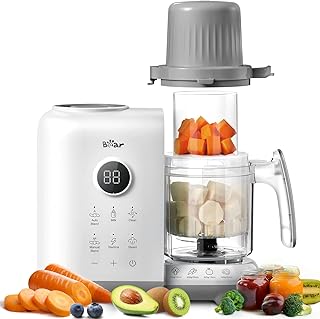
| Bear Dual-Layer Steamer | Batch cooking multiple foods | $53.97 |
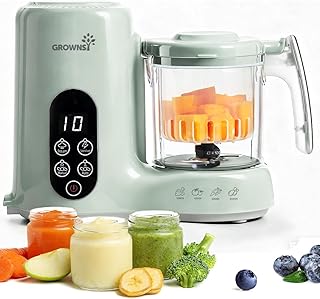
| Grownsy Steamer & Blender (Green) | Matching your kitchen aesthetic | $69.99 |
| Momcozy AutoMeal | Hands-off texture control | $99.99 |
| Grownsy Stainless Steel Basket | Longest lifespan | $79.99 |
| MOMYEASY 5-in-1 | Easiest cleanup | $49.62 |
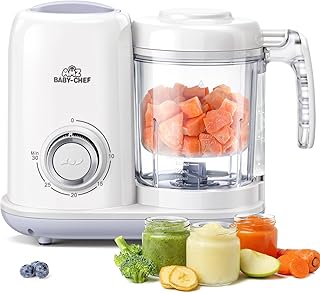
| AMZBabyChef 4-in-1 | Lowest entry price | $41.39 |
How We Picked
We evaluated every machine in this roundup on four criteria: steaming evenness (does the center of a carrot slice soften at the same rate as the edge?), blend quality (can it produce a texture thin enough for a six-month-old without any grit?), cleanup burden (how many parts, how long, does food get stuck?), and build integrity (does the housing survive a drop, and is the plastic free of odors after repeated heating?). We used real produce — sweet potato, zucchini, apples, lentils — and tracked outcomes across multiple sessions.
The 8 Best Baby Food Makers in 2026
Grownsy Steamer & Blender (White)
This is our default recommendation for most families beginning solids or practicing baby-led weaning. The elevated steam basket design keeps food above the water line, which prevents the soggy, diluted texture that plagues cheaper units. The blend cycle runs immediately after steaming, so you do not lose heat and wait. Two practical advantages: the jar is wide enough to scoop out with a regular spoon without scraping corners, and the base is stable enough that it does not shift during blending. The single real drawback is that the blending capacity fills up quickly — once you have more than one baby or want to batch-cook for a full week, you will run multiple cycles. If you only need single servings and want the simplest workflow, this machine delivers without fuss.
NutriBullet Baby Complete
The NutriBullet produces the smoothest puree of any machine tested, which matters most for babies in their first few weeks of solids when gagging reflexes are still strong. The 32-ounce capacity means one batch covers a full day of meals. The trade-off is that steaming and blending happen in separate steps with a cooling pause between them, adding roughly ten minutes to your total workflow. It also lacks the elevated basket design, so some vegetables soften unevenly. Skip this if you need to steam and blend in one uninterrupted sequence or if your baby already tolerates slightly textured food.
Bear Dual-Layer Steamer & Blender
The dual-layer steam basket is the headline feature here, and it genuinely changes batch cooking. You can steam a tray of apples while simultaneously cooking a tray of butternut squash below, producing two purees from a single session. At $53.97, that capacity is hard to beat. The con: the 18.5-ounce blending jar is small relative to the steaming capacity, so you will be running extra blend cycles when you steam both layers full. This machine rewards the cook who plans ahead and does not mind splitting one batch into two blend rounds.
Grownsy Steamer & Blender (Green)
Functionally identical to the white version above — same steam basket, same blend cycle, same ratings. The only difference is color. It exists because matching kitchen aesthetics is a real decision factor for some buyers, and we are not going to pretend otherwise. If the white version already sounds right, get it in whichever color you prefer. No other distinguishing features set these apart.
Momcozy AutoMeal
The AutoMeal is the only machine tested with automatic three-stage texture settings, which means you select a fineness level and it adjusts steam time and blend duration accordingly. For parents who are unsure what texture a given month requires, this removes guesswork. The self-cleaning function also works surprisingly well — a fifteen-second hot-water cycle dissolves most residue without manual scrubbing. At $99.99, it is the most expensive unit here, and the 15-ounce cup is smaller than you might expect. Skip this if you already know your baby’s preferred texture and want to save forty dollars.
Grownsy Stainless Steel Basket
The steam basket on this model is stainless steel rather than the BPA-free plastic used on the other Grownsy units. That single change adds durability and eliminates any lingering question about plastic degradation under repeated heating cycles. It also carries a $10 price premium over the plastic-basket version. Performance in blending is identical. Choose this if you plan to use the machine beyond the baby-food phase — steaming vegetables for family dinners works well with the steel basket. The elevated design still prevents waterlogging.
MOMYEASY 5-in-1
At $49.62, this machine undercuts the NutriBullet on price while adding a self-cleaning cycle and a bottle-warming function that the NutriBullet lacks. The five-in-one claim is mostly accurate: steaming, blending, grinding, warming, and cleaning all work without major complaints. The puree texture is good but a step behind the NutriBullet’s silkiness. The housing feels lighter and less rigid than pricier competitors. For a parent who wants one device that handles both food and bottles without spending more than fifty dollars, this is the value play.
AMZBabyChef 4-in-1
The lowest-priced machine in this roundup at $41.39 still steams and blends competently enough for early-stage purees. Tritan plastic gives it a sturdy feel that exceeds the price point. The limitation is the 4-in-1 design: steaming and blending happen in the same container, which means you must empty water before switching to blend mode. That extra step adds friction. Skip this if you want a single-button workflow, but if budget is the only factor, it delivers a functional product without obvious quality corners.
Buying Guide
Elevated vs. Submerged Steaming
The single most important design choice is whether the steam basket sits above the water or in it. Elevated baskets circulate hot vapor around the food without saturating it, producing a drier, more concentrated result that blends to a smoother texture with less added liquid. Submerged designs are cheaper to manufacture but require you to drain water before blending, and food that sits in boiling water leaches more nutrients and ends up bland. If you have never used a baby food maker before, start with an elevated design — the difference is immediately noticeable.
Blend Capacity and Batch Size
A twelve-ounce jar is fine for a single baby eating two meals a day. If you are cooking for twins, prepping a week of meals, or also using the machine for family sides, look for eighteen ounces or more. Pay attention to whether the steaming capacity and blending capacity are matched — some machines steam a full tray but can only blend half of it at once, which doubles your workflow. The Bear Dual-Layer is the clearest example of this imbalance across the specs we compared.
Cleanup Reality
Self-cleaning cycles work on fresh residue but fail on dried-on puree. If you plan to run the machine nightly and forget to clean until morning, look for wide openings and few seams where food packs in. The Momcozy and MOMYEASY models handle this best. Units with narrow jar openings or complex blade assemblies become tedious within a week, and abandoned baby food makers sitting in a cabinet are the most common regret we hear from parents.
Our Verdict
Our top pick is the Grownsy Steamer & Blender in White. It balances even steaming, immediate blending, manageable capacity, and a stable price point without any glaring design compromise. The budget pick is the AMZBabyChef 4-in-1 at $41.39, which gives you a functioning puree with minimal fuss. The exception: if your baby is at the very start of solids and gag reflexes are your main concern, the NutriBullet Baby Complete produces a noticeably smoother texture that other machines in this price range cannot match.
FAQ
Is a baby food maker worth it compared to a regular steamer and blender?
A dedicated machine integrates steaming and blending so you can move from raw vegetable to finished puree in under fifteen minutes without transferring hot food between containers. If you are only making a few ounces at a time, a standard pot and blender suffice. The baby food maker earns its keep when you batch-cook weekly.
Can I use these machines for toddler food too?
Yes. Once your child tolerates texture, you can shorten the blend cycle or pulse briefly to leave small chunks. The stainless steel Grownsy and the Bear with dual-layer baskets are particularly useful for steaming family vegetables beyond the baby phase.
How long do these machines last?
The housing and blade assembly typically survive two to three years of daily use. The most common failure point is the sealing ring or lid gasket, which can warp from repeated heat exposure. Machines with replaceable seals are worth the small premium if you plan to use the device for multiple children.
Do I need to add water when blending?
Usually a small amount — one or two tablespoons for leafy greens and firm vegetables like carrots. Soft fruits like bananas and avocados blend with no added liquid. The elevated steam design leaves less surface water on the food than submerged designs, so you will generally need to add a bit more liquid to reach a pourable consistency.