Key takeaways
- Learn how to choose a baby carrier that fits a petite frame: torso measuring, waist belt and panel fit, strap adjustment, and sharing between parents.
As an Amazon Associate we earn from qualifying purchases.
Most baby carriers are designed around an average adult frame, so a petite parent often finds the shoulder straps sliding toward the elbows, the waist belt riding up toward the ribs, and the panel reaching so high that it hides the baby. The carrier still holds the baby, but every walk feels like a wrestling match with loose webbing and a belt that never sits where it should. That poor fit means sore shoulders and a baby who sinks too low.
This guide is for moms and dads under about five foot four who want a carrier that truly fits a smaller frame, whether they carry a newborn or a toddler. It explains how to measure your torso, how to judge panel width and waist belt placement, how to adjust the straps so the weight sits on your hips, and how to share one carrier between two parents of different heights. It follows fit principles used by babywearing educators.
How to Choose
Measure Your Torso Before You Shop
Torso length matters more than overall height when a carrier has to fit a petite frame. Measure from the bony bump at the base of your neck down to the top of your hip bones, and write the number down before you look at any carrier. Compare it with the torso range or the minimum panel height listed on the product page, and skip any carrier whose smallest setting is still longer than your torso. A panel that is too tall pushes the waist belt up and forces the shoulder straps to angle outward, which is why many petite parents feel swallowed by standard carriers. It also shows how far straps must adjust when two parents share one carrier.
Check the Waist Belt and Panel Width
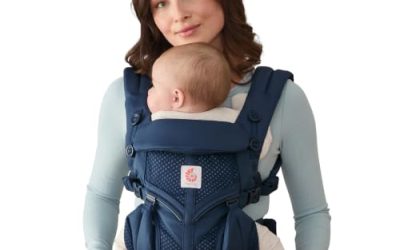
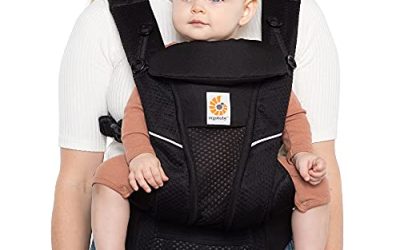
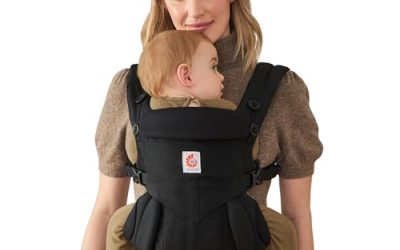
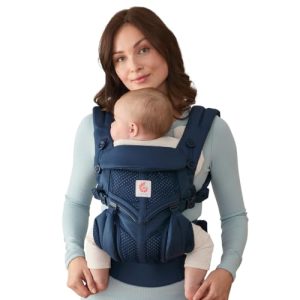
The waist belt should sit snugly on your natural waist or high on your hip bones, not slide up to your ribs when you walk or bend. Look for a belt that tightens below the smallest setting you expect to need, and check that the belt padding is short enough that it does not wrap past your sides. The panel matters as much: it should support your baby from one knee to the other without spreading the legs too wide, and its top edge should sit below the baby’s armpits. A panel that is too wide forces a newborn’s legs into a spread, while a panel that is too tall limits arm movement and hides the baby’s face from view.
Look for Short, Fully Adjustable Straps
Shoulder straps cause the most frustration for petite parents, because straps made for longer torsos leave inches of loose webbing hanging even when pulled fully tight. Look for straps that adjust from the front of the carrier, so you can tighten them while the baby is already in place, and check that the chest clip slides far enough to sit across your upper chest rather than near your neck. Crossable straps are worth considering, since crossing them in an X across the back keeps them from slipping off narrow shoulders. Also check the strap padding: padding that extends too far down the strap will sit against your arms instead of your shoulders and make the fit feel bulky.
Think About Sharing the Carrier
Many petite parents share one carrier with a partner, and that only works when every adjustment point moves quickly between two different bodies. Before you settle on a carrier, practice the hand-off: loosen the waist belt, shoulder straps, and chest clip, then tighten everything again for the second parent while the baby waits nearby. A carrier with buckles and sliders you can reach and move with one hand makes this easier than one that needs two hands and a mirror. If one parent is much taller, a wrap or a mei tai style carrier with long fabric ties can be more forgiving than a buckle carrier, because the ties adapt to any torso length without a fixed minimum setting.
Which One Fits Your Situation
Both Parents Are Petite
When both parents are petite, start with a carrier with a short minimum torso setting and a narrow panel, since neither wearer needs the extra length of a standard carrier. Choose one whose waist belt tightens small enough for the slimmer parent and whose straps shorten without leaving tails of webbing. Keep one waist belt setting and adjust only the shoulder straps between wearers, which makes hand-offs quick. A panel also keeps a newborn visible and close enough to kiss.
One Petite Parent and One Taller Partner
Sharing between a petite parent and a taller partner comes down to how far the straps and waist belt can travel between settings. Pick a carrier where the shoulder straps adjust from the front and the waist belt has a long range, so the taller partner is not stuck with a belt that barely closes. Agree on a reset routine: whoever finishes carrying loosens every strap, so the next parent starts from the same point each time.
A Petite Parent Carrying a Newborn
A newborn needs a panel narrow enough to support the legs knee to knee without forcing them apart, and short enough that the baby’s face stays visible above the top edge. Look for a carrier with an adjustable panel width, a cinch that narrows the seat, and a waist belt that tightens high on your waist so the baby sits close enough to kiss. Keep the baby high on your chest, with the chin off the chest.
A Petite Parent Carrying a Toddler
Toddlers are heavier and taller, so the panel needs to grow with them while the waist belt fits a frame. Look for a carrier with an adjustable panel height and width, so you can widen the seat as your toddler grows. A back carry feels better, because it moves the weight closer to your center; practice it over a bed until the transfer feels smooth. A waist belt that stays on your hips takes the load off your shoulders.
Common Mistakes
- Buying a carrier based on overall height instead of torso length, which is the measurement that decides whether the panel and straps actually fit.
- Tightening the shoulder straps first and the waist belt last, which pulls the weight onto the shoulders instead of letting the hips carry it.
- Leaving the chest clip too high, where it presses on the neck and lets the straps slide off narrow shoulders.
- Choosing a panel that is too wide for a newborn, forcing the legs into a spread that is wider than the baby’s natural position.
- Skipping the practice run with a doll or towel, then trying to learn every adjustment while holding a real baby for the first time.
Frequently Asked Questions
How do I know if a carrier fits my petite frame?
A carrier fits when the waist belt stays on your waist or hips without riding up, the shoulder straps tighten without loose tails, and the baby sits high enough to kiss. The panel should support the baby knee to knee, with the top edge below the armpits. If every strap is at its shortest setting and the fit still feels loose, the carrier is too large for your frame.
What torso length should I look for as a petite parent?
Measure from the bony bump at the base of your neck to the top of your hip bones, then compare that number with the carrier’s torso range or minimum panel height. Many petite parents measure between twelve and fifteen inches, so a carrier whose smallest setting matches that range is a good starting point. If no torso range is listed, use the minimum waist belt size as your guide.
Can one carrier fit both a petite mom and a taller dad?
Yes, when the carrier has an adjustment range on the waist belt, the shoulder straps, and the chest clip, one carrier can fit two parents of different heights. The key is a reset between wearers: loosen every strap, then tighten them, starting with the waist belt. Wraps and mei tai carriers with long ties are the most forgiving for sharing, because fabric ties adapt to any torso length.
Should petite parents use a front carry or a back carry?
A front carry is a good place to start, because you can see the baby’s face and adjust the straps easily. A back carry becomes more comfortable as the baby grows into a toddler, since it moves the weight closer to your center and frees your arms. Practice the move to a back carry over a bed first, and switch when the transfer feels smooth.
FAQ
How do I know if a carrier fits my petite frame?
What torso length should I look for as a petite parent?
Can one carrier fit both a petite mom and a taller dad?
Should petite parents use a front carry or a back carry?
More from Amazon
Programs that pair well with the guide above. Offers and eligibility are set by Amazon and may change.
Build one list of everything you need for the new arrival and share it with family and friends.
Create a baby registrySet up recurring deliveries of everyday items on eligible products. Terms and savings are set by Amazon.
Explore Subscribe & SaveFree shipping on eligible items, Prime Video and more. Eligible new members can start with a free trial.
Start a Prime free trialAudiobooks and podcasts to listen to on the go. Eligible new members can start with a free trial.
Try Audible freeAs an Amazon Associate we earn from qualifying purchases.