Key takeaways
- Learn how to choose a baby carrier for a baby with Down syndrome: head and neck support, hip-healthy seating, airway checks, and questions for your doctor.
As an Amazon Associate we earn from qualifying purchases.
Choosing a carrier for a baby with Down syndrome is less about finding the newest design and more about finding a setup that supports a body building strength on its own timeline. Many babies with Down syndrome have low muscle tone, which means they need extra help holding their head steady, keeping their airway open, and sitting with their hips in a supported position. A carrier that lets a small baby slump or fold forward can turn a short walk into a strain, so fit and support matter far more than the label on the box.
This guide is for parents and caregivers who want to carry their baby close while respecting those needs, from the first weeks at home through the toddler years. It walks through the features that make a real difference, the positions that suit each stage, and the warning signs that mean it is time to stop, adjust, or ask the pediatrician or physical therapist who knows your baby for advice before carrying again.
How to Choose
Head and Neck Support That Grows With Your Baby
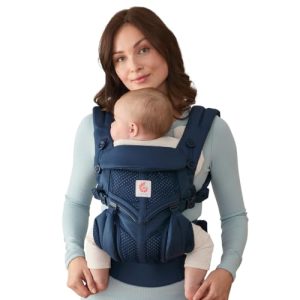
Low muscle tone often means a baby with Down syndrome takes longer to hold the head up on their own, so the carrier must do that job until the baby can. Look for a panel that reaches high enough to cradle the back of the head without covering the face, and for a headrest or hood that can be raised, lowered, or folded away as strength improves. The support should hold the head gently in line with the spine, never pushing the chin down toward the chest. A carrier with several height settings is worth more here than one with a single fixed panel, because the right height at two months will not be the right height at eight months.
A Seat That Holds the Hips in an M-Shape
A healthy carrying position keeps the knees higher than the bottom, with the legs spread in a squat often called the M-shape. For a baby with low tone, this matters even more, because loose muscles let the legs dangle if the seat is too narrow or too flat. Choose a carrier with a wide, adjustable seat that supports the baby from one knee to the other, and check that the fabric stays under the thighs rather than cutting across them. If the seat cannot be widened or narrowed to match your baby, keep looking. The goal is a deep seat that lets the baby rest with the spine softly rounded and the weight spread across the bottom and thighs.
An Airway You Can Always See and Check
Because babies with Down syndrome can have narrower airways and weaker neck muscles, you need to see your baby’s face at all times while carrying. The baby should sit high enough to kiss, with the face visible and the nose and mouth clear of fabric, straps, and your own clothing. Avoid any position that lets the chin tuck against the chest, since that can narrow the airway, and skip carriers that hide the baby behind a tall panel you cannot peek over. Before every outing, do a quick check: face visible, chin off the chest, breathing easy and regular. If you cannot see the face without shifting the carrier, the fit is wrong for now.
Adjustability, Comfort, and an Easy Way Out
A carrier that fits one parent perfectly may not fit the other, and a baby with low tone needs readjusting more often than a baby who can brace themselves. Look for straps and a waist belt that tighten in small, smooth steps, so you can snug the baby close without yanking the fabric tight in one pull. Padded shoulder straps and a supportive waist belt protect your back during the longer carries that soothe a fussy baby. Equally important is how the carrier opens: you should be able to lift the baby out without a struggle, even when they have gone limp with sleep. Practice at home over a bed or sofa until taking the baby out feels calm.
Which One Fits Your Situation
Newborn Days at Home
In the early weeks, keep carries short and close, with the baby facing you and the head fully supported. A soft wrap or a structured carrier with a newborn insert both work, as long as the seat is narrow enough for a tiny baby and the headrest reaches the ears. Stay at home for the first tries, check the airway often, and stop for a break on a flat surface whenever the baby seems uncomfortable.
Out for Appointments and Errands
Clinic visits and errands call for a carrier you can put on and take off quickly, since you will lift the baby in and out often. A structured carrier with buckles usually beats a long wrap here, as it goes on in seconds and lets a nurse or therapist see the baby without unwrapping layers. Keep the baby facing you, keep the face visible, and bring a blanket for warmth instead of tucking layers inside the carrier.
A Baby Who Falls Asleep in the Carrier
Sleepy babies with low tone can slide lower in the carrier as their muscles relax, so a nap is not a reason to stop checking. Tighten the straps gently once the baby settles, confirm the chin is still off the chest, and keep the face in view. If the baby has slipped down or the head has flopped forward, sit down, lift the baby out, and reposition them. Short, supervised naps are fine; long stretches without a check are not.
An Older Baby or Toddler Who Still Needs Support
Some children with Down syndrome keep needing extra trunk support well into the toddler years, and that is normal. A carrier with a taller panel, a wide seat, and a strong waist belt lets you keep carrying a heavier child without your shoulders taking all the weight. Hip and back carries become useful once the child can sit with help and hold the head steady. Ask your therapist which positions suit your child’s current strength before trying a new one.
Common Mistakes
- Choosing a carrier by style alone and only discovering at home that the panel is too short to support the head.
- Letting the baby sit too low, so the face presses into your chest and the chin tucks toward the chest.
- Using a seat that is too wide for a newborn, which forces the legs straight instead of letting the knees sit higher than the bottom.
- Adding blankets, bibs, or bulky clothing inside the carrier, which can cover the face and hide breathing changes.
- Skipping the check-in with the pediatrician or therapist after surgery, a hospital stay, or a change in the baby’s breathing or feeding.
Frequently Asked Questions
When can I start carrying my baby with Down syndrome?
Many families start with short, supervised carries at home once the baby is settled and the pediatrician is happy with their breathing and feeding. There is no single age that fits every baby, because heart conditions, breathing issues, and muscle tone vary widely. Ask your pediatrician when carrying is appropriate for your baby, and start with five or ten minutes at a time while you watch how the baby responds.
Is a wrap or a structured carrier better for low muscle tone?
Either style can work, and the best choice is the one you can adjust snugly and check easily. A stretchy wrap moulds closely around a newborn and supports the whole back, while a structured carrier is quicker to put on and easier to adjust. Try both at home, and keep the one that holds the head steady, shows the face, and lifts out easily.
How do I know if the carrier fits my baby?
The baby should sit high enough to kiss, with the face visible and the chin off the chest. The knees should sit higher than the bottom, the seat should reach from knee to knee, and the back should be supported without gaps. If you find yourself holding the baby’s head up with a hand, or the baby keeps sliding to one side, the carrier needs adjusting or a different size.
What should I do if my baby seems uncomfortable while being carried?
Stop, sit down somewhere safe, and lift the baby out of the carrier. Check their breathing, colour, and position, and let them rest flat for a few minutes before trying again. If the same problem keeps happening, or you notice noisy breathing, colour changes, or unusual sleepiness, contact your pediatrician rather than trying another carrier position. Your baby’s care team knows their history and can tell you what to change.
FAQ
When can I start carrying my baby with Down syndrome?
Is a wrap or a structured carrier better for low muscle tone?
How do I know if the carrier fits my baby?
What should I do if my baby seems uncomfortable while being carried?
More from Amazon
Programs that pair well with the guide above. Offers and eligibility are set by Amazon and may change.
Build one list of everything you need for the new arrival and share it with family and friends.
Create a baby registrySet up recurring deliveries of everyday items on eligible products. Terms and savings are set by Amazon.
Explore Subscribe & SaveFree shipping on eligible items, Prime Video and more. Eligible new members can start with a free trial.
Start a Prime free trialAudiobooks and podcasts to listen to on the go. Eligible new members can start with a free trial.
Try Audible freeAs an Amazon Associate we earn from qualifying purchases.