Navigating the overwhelming world of gear for a new baby often leads exhausted parents straight to the infant swing section. Designed to mimic the rhythmic motion of the womb, a quality baby swing can offer priceless minutes of hands-free soothing during those intense fourth-trimester weeks. However, choosing a swing specifically for a newborn requires a much sharper focus on structural safety, anatomical support, and motor gentleness than buying for an older, stronger infant.
With countless models flooding the nursery market in 2026, it is easy to get distracted by flashy features like touchscreen consoles, built-in lullaby playlists, and elaborate overhead mobiles. What actually matters when evaluating gear for a tiny human with minimal head control comes down to mechanical reliability, proper seat angle, frame footprint, and effortless hygiene. This guide breaks down the essential criteria so you can select a swing that effectively calms your newborn while keeping safety and practical daily usability front and center.
As an Amazon Associate we earn from qualifying purchases at no extra cost to you.
Recline Angle and Newborn Ergonomics
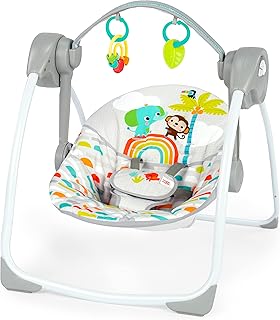
A newborn infant lacks the cervical spine strength needed to hold their head upright independently. If a swing seat sits too upright, the baby’s head can slump forward toward their chest, potentially compromising their delicate airway. Look for a model that offers a dedicated newborn recline setting—ideally a deep recline that cradles the lower back while keeping the head in a neutral, open alignment. Integrated infant inserts or removable head cradles should fit snugly without pushing the head forward or forcing chin-to-chest contact. Always verify that any included padding is approved by the manufacturer specifically for that model, as adding third-party inserts can introduce posture or suffocation hazards. Remember that baby swings are intended solely for supervised awake time and calming sessions, never for unmonitored sleep.
Motion Profiles and Speed Control
Not all infants respond to the same type of movement. Traditional swings operate on a single axis, moving either front-to-back like a playground swing or side-to-side like a cradle. Modern multi-motion models combine vertical bounce with horizontal glide, attempting to replicate the complex movements of a parent swaying or pacing. When evaluating a swing for a newborn, pay close attention to the lowest speed setting. A gentle, subtle glide is far more effective and soothing for a two-week-old than a fast, aggressive sway. Having multiple speed options allows the swing to adapt as your baby grows, but a low, whisper-quiet baseline speed is essential for those delicate early weeks.
Power Sources, Frame Footprint, and Stability
The physical footprint of an infant swing can vary dramatically, ranging from compact travel frames to sprawling full-size bases that take up significant real estate in your living room. Measure your intended space before purchasing, keeping in mind that you need additional clearance around the perimeter for full movement. Frame stability is paramount; the base should feel heavy and well-anchored so it cannot shift or tilt if bumped by an older sibling or pet. Regarding power, prioritize AC wall-plug adapters over battery-only models. Swings draw considerable energy to keep heavy motors gliding smoothly, and relying exclusively on batteries quickly becomes expensive and inconvenient when the unit unexpectedly dies mid-soothe.
Harness Systems and Safety Boundaries
Safety standards mandate a secure restraint system, typically a five-point or three-point harness. For newborns, an adjustable five-point harness with padded straps is superior because it prevents slumping and keeps the infant centered over the seat cushion. Pay strict attention to both the lower and upper weight limits specified by the manufacturer. While many swings are rated from five pounds up to twenty or twenty-five pounds, the critical sign to discontinue use is developmental: the moment your baby shows signs of trying to roll over, sit up independently, or push up on hands and knees, swing usage must end immediately. Choosing a model with intuitive buckle releases and easily adjustable strap heights ensures a safe fit during every week of use.
Washability and Everyday Maintenance
Newborns are famously prone to diaper blowouts, spit-up, and drool. A swing seat that is difficult to strip down and clean will quickly become a source of daily frustration. Look for seats with machine-washable fabric covers that snap or zip off easily without requiring you to disassemble the underlying structural frame. Moisture-resistant lining beneath the top cover is a major bonus, preventing liquid spills from soaking into the internal foam or electronic components. Avoid overly textured plush fabrics that trap hair and lint or take days to air-dry; instead, favor breathable, soft, quick-drying performance fabrics that hold up well to repeated washing cycles.
When to Spend More vs. When to Go Budget
High-end baby swings often command premium prices by incorporating smart features like app connectivity, customizable sway patterns, integrated white noise machines, and ultra-sleek minimalist designs. Investing in a premium model makes sense if you have limited floor space and need a compact multi-axis unit, or if you value remote controls that let you adjust speed and sound without walking over and disturbing a drowsy baby. However, budget-friendly traditional swings with a basic side-to-side motion, sturdy frame, and reliable AC power plug often calm fussiness just as effectively as high-tech alternatives. If your budget is tight, focus your dollars on safety certifications, deep recline quality, and stable construction rather than smart digital integrations.
Related Guides
If you are building out your nursery gear suite alongside a swing, explore our tested newborn baby swing rankings to see which models performed best in real-world testing. For families who plan to pair indoor soothing gear with smooth outdoor transportation, check out our selection of top-tier newborn stroller systems. Additionally, if you want high-tech responsive movement designed specifically for safe night sleep, take a look at our curated list of luxury smart bassinets.
FAQ
How long can a newborn stay in a baby swing per session?
Pediatric experts generally recommend limiting baby swing sessions to no more than 30 minutes at a time, up to twice a day. Extended time in a semi-upright swing can restrict dynamic movement, put pressure on the back of the baby’s head, and limit opportunities for tummy time. Always move your newborn to a flat, firm sleep surface if they fall asleep in the swing.
Can a newborn sleep overnight in a baby swing?
No, newborns should never sleep overnight or unsupervised in a baby swing. The inclined position of swing seats poses a risk of positional asphyxiation if the infant’s head slumps forward onto their chest. For sleep, transfer your baby to an approved safe sleep environment like a flat crib or bassinet.
Are side-to-side or front-to-back swing motions better for newborns?
Neither motion is objectively better, as individual newborn preferences vary widely. Many newborns respond especially well to side-to-side gliding motion because it mimics the rock of a parent’s arms. However, having a swing that allows you to rotate the seat position between front-to-back and side-to-side gives you the best chance of calming a picky infant.
When should I stop using a baby swing for my baby?
You should stop using a baby swing as soon as your infant reaches the manufacturer’s maximum weight limit or begins attempting to sit up, push up, or roll over, whichever comes first. For most babies, this transition happens between three and six months of age. Continuing to use a swing once an infant is mobile creates a severe tip-over or fall hazard.