Key takeaways
- The age printed on a LEGO box is a good starting point: toddlers do best with oversized bricks, ages 4 to 5 with small simple builds.
The age printed on a LEGO box is a good starting point: toddlers do best with oversized bricks, ages 4 to 5 with small simple builds, ages 6 to 8 with step-by-step sets of a few hundred pieces, and ages 9 and up with bigger, more mechanical projects. The label is only part of the story, though, because patience, fine motor skills and interest matter as much as the birthday.
This guide explains how to read the age label, what each age band can usually handle, and how to tell when a set is too hard or too easy. It does not name specific sets, since the same logic applies to any theme your child is excited about in 2026.
How to Read the Age Label
The number on the box is the manufacturer’s guidance, built around the typical build experience and safety for that age. A label of 4+ means the set is designed for children four and older, with parts and instructions suited to that stage. It reflects design choices such as piece size, number of steps and how much fine motor control the build asks for. Labels of 18+ mark sets designed for adult builders, with display value and complexity in mind.
The label is not a test your child must pass. Plenty of seven-year-olds build sets labeled 9+ with help, and plenty of ten-year-olds prefer sets labeled for younger ages because they like the theme. Treat the number as the earliest age the design makes sense, then adjust for your child.
Safety is the one place the label is firm. Small bricks and pieces can be a choking hazard for young children, which is why sets for under-threes use larger parts. If you have a toddler at home, keep small-brick sets for older siblings out of reach, and pick up loose pieces after each session. Check the floor and sofa cushions before a baby or toddler gets there.
Age-by-Age Breakdown
Toddlers and Young Children (Under 4)
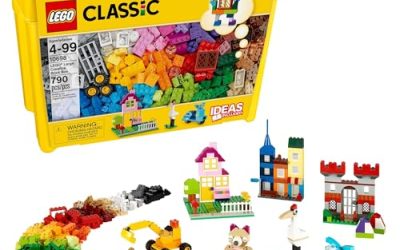
Toddlers need oversized bricks that are easy to grip and press together. The aim at this stage is stacking, knocking over and rebuilding, not following instructions. Sets in this range often focus on animals, vehicles and everyday scenes, with a small number of pieces. Open-ended bins of bricks work well too, since there is no wrong way to build a tower. Always supervise play, and keep standard small-brick sets out of reach until the child is old enough.
Early Builders (Ages 4 to 5)
Around four, many children can handle standard small bricks with a simple build, usually a few dozen pieces and picture-heavy instructions. Expect adult help for pressing tough connections and finding parts. Children this age often prefer sets that become a toy right away, so vehicles, animals and small play scenes are popular. Sit with them for the first few builds and let them place the final pieces. Praise the finished model, even if a few bricks are in the wrong place.
Confident Builders (Ages 6 to 8)
This is the sweet spot for classic LEGO. Many children can follow numbered steps, sort pieces by color and finish a set of a few hundred bricks over one or two sessions. They are ready for themes with characters, buildings and vehicles, and some start to enjoy modifying a build. Keep an eye on frustration: a long set with tiny repeated steps can feel endless to a six-year-old, and splitting the build across two days is a perfectly good fix.
Ages 9 to 12, Teens and Adults
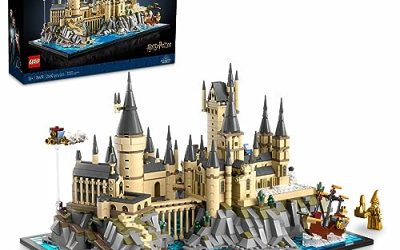
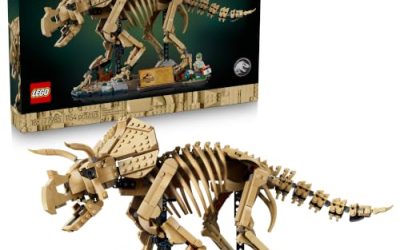
Older children can handle bigger sets with several bags, numbered stages and moving parts. Mechanical or technical sets use gears, axles and pins, and they reward patience and logic. Teens and adults often enjoy display builds, architecture and detailed vehicles that take days to finish, and the slow pace is part of the appeal for many of them. This group often benefits from a clear workspace, good lighting and a sorting tray. Teens sometimes prefer to build alone, so offer help without hovering.
Quick Age Reference
| Age Range | Typical Build Style | Instruction Style | What to Watch For |
|---|---|---|---|
| Under 4 | Oversized bricks, free play | Little or none | Small parts, supervision |
| 4 to 5 | Small, quick builds | Large pictures, few steps | Needs adult help |
| 6 to 8 | Mid-size sets, themed play | Numbered steps | Frustration on long builds |
| 9 to 12 | Large sets, simple mechanisms | Multiple bags, detailed | Sorting and patience |
| 13 and up | Display and technical sets | Complex, multi-stage | Time and space |
Signs a Set Is Too Hard or Too Easy
A set is likely too hard when your child gives up within the first twenty minutes, asks you to do every step or keeps making the same mistake. Look for tiny pieces that need precise placement, long repeated sections and instructions that skip between bags. If you see these, set the box aside for a few months, or build it together and let your child take over the final stages.
A set is likely too easy when your child finishes quickly and loses interest, or when they move on to rebuilding it in a different way. That is not a bad sign. It may mean they are ready for a slightly higher age label or a theme with more detail. Many children also enjoy returning to simple sets for quick, relaxed play, and there is no need to push them toward harder builds before they are ready.
Interest changes everything. A child who loves trains will tackle a harder rail set than a plain set of the same difficulty. When in doubt, match the theme to the child and the difficulty to the lower end of the age range.
Choosing by Skill, Not Just Age
Two children of the same age can sit at opposite ends of the skill range, so it helps to look at the habits behind the number. A child who sorts pieces without being asked, reads pictures carefully and returns to a build after a break is ready for a more demanding set. A child who loves to build freely but dislikes instructions may do better with open-ended brick boxes than with a detailed model.
Fine motor skill matters too. Pressing small plates, rotating tiny connectors and lining up thin pieces all need steady hands, and these skills develop at different speeds. If your child struggles with the physical side of building, a lower age band with larger pieces keeps the fun in the activity while the hands catch up.
Finally, think about how the set will be used afterward. Some builds become toys that get played with every day, while others end up on a shelf. Ask your child which they expect before you commit to a large box.
Before You Buy Checklist
- Check the age label on the box, and note whether it says 18+ for adult builders.
- Match the piece count to your child’s patience, not just their age.
- Look for instruction style: large pictures for beginners, numbered bags for older builders.
- Keep sets with small parts away from children under three.
- Choose a theme your child already cares about.
- Plan a clear, well-lit space and a tray or bowl for loose pieces.
- Decide whether this is a solo project or something to build together.
Related guides
- How To Plan A Low-Stress Day Out With A Baby
- Diaper Bag Backpacks For Busy Parents
- Digital Hygrometer For Nursery
Frequently Asked Questions
Can my child build sets above their age label?
Often yes, with help. The label sets the earliest recommended age, and some children enjoy a challenge. Watch for frustration and offer support, and keep small parts away from younger siblings.
What age is best to start with LEGO?
Many families start with oversized bricks around age one and a half to two, then move to standard bricks around four. Follow the age label and your child’s readiness.
Are adult sets suitable for kids?
Sets labeled 18+ are designed for adult builders and may be complex or fragile. Some older teens enjoy them, but check the label and think about the project before buying.
How do I store LEGO pieces safely?
Use lidded bins or trays, and keep small-brick collections out of reach of toddlers. Sorting by color or set keeps rebuilding easier and lowers the risk of lost parts. Keep the instruction booklets together in a folder so a set can be rebuilt months later.
FAQ
Can my child build sets above their age label?
What age is best to start with LEGO?
Are adult sets suitable for kids?
How do I store LEGO pieces safely?
More from Amazon
Programs that pair well with the guide above. Offers and eligibility are set by Amazon and may change.
Build one list of everything you need for the new arrival and share it with family and friends.
Create a baby registrySet up recurring deliveries of everyday items on eligible products. Terms and savings are set by Amazon.
Explore Subscribe & SaveFree shipping on eligible items, Prime Video and more. Eligible new members can start with a free trial.
Start a Prime free trialAudiobooks and podcasts to listen to on the go. Eligible new members can start with a free trial.
Try Audible freeAs an Amazon Associate we earn from qualifying purchases.