Key takeaways
- Best balanced choice: Tojiro DP set. Tojiro’s DP line is a practical entry point to Japanese-style knives, typically using a VG-10 stainless cutting core with softer stainless cladding. Look for a gyuto-and-petty combination or assemble those pieces individually; availability and bundled contents vary. The thinner profile suits precise slicing, while stainless cladding makes care less demanding than fully reactive carbon steel.
- Best for a santoku-first kitchen: Global knife sets. Global offers coordinated stainless-steel sets and lightweight, slim-handled knives. A santoku-and-petty pairing works well for cooks who want a shorter all-purpose blade and a nimble small knife. The dimpled metal handle is distinctive, but its feel is personal: try a similar handle before buying a large set if you prefer a substantial, contoured grip.
- Best premium option: Shun Classic sets. Shun Classic knives use a VG-MAX stainless cutting core with Damascus-patterned cladding and a D-shaped composite handle. Sets commonly combine an 8-inch chef’s knife with smaller prep knives. They offer a polished finish and fine edge, but cost more than many basic stainless options, and the thin edge calls for careful cutting technique.
- Best for traditional carbon-steel upkeep: a Sakai-made carbon gyuto and petty pairing. Sakai is a Japanese knife-making center, and makers such as Sakai Takayuki offer many styles and steel options. Instead of choosing a large boxed set, select two compatible knives in a steel you can maintain. Carbon steel can take a keen edge but needs prompt washing and drying to limit rust and patina changes.
The best Japanese kitchen knife sets depend on how you cook
The best Japanese kitchen knives set for most home cooks is a compact three-piece set: a 7–8-inch gyuto or chef’s knife, a 5–6-inch petty knife, and a honing or sharpening plan. It covers everyday chopping and smaller prep without charging for specialty blades that may sit unused. Choose stainless steel for easier care, carbon steel if you’re comfortable drying knives promptly, and a santoku-led set if you prefer a shorter, flatter blade.
Japanese-style knives are not all made in Japan, and “Japanese steel” alone doesn’t tell you how a knife will feel or perform. Compare the actual blade profile, steel, handle, included pieces, and maintenance requirements—not just the set size.
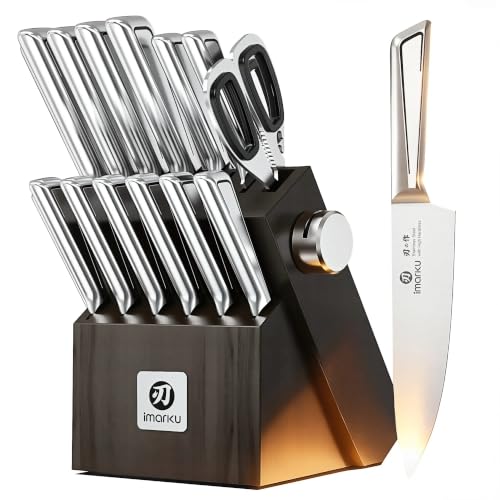
imarku Japanese High Carbon Stainless Steel Knife Set with Block, Precision-Forged Gyutou Kitchen Knives with Built-in Sharpener, Ultra-Sharp 10–15° Edge, Ergonomic Non-Slip Handle, Dishwasher Safe
Included for 'Best Japanese Kitchen Knife Sets' because the listing specifies Ultra-Sharp 10 and 15° Edge, details this guide uses to compare options.
View on Amazon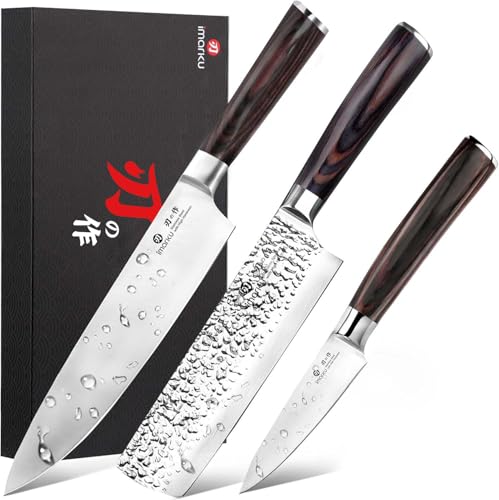
imarku 3 Pieces Knife set, Japanese HC Stainless Steel Kitchen Knife Set
Included for 'Best Japanese Kitchen Knife Sets' because the listing specifies Japanese HC Stainless Steel Kitchen Knife Set, details this guide uses to compare options.
View on Amazon
imarku 14-Piece Japanese Gyutou Stainless Steel Kitchen Knife Set
Included for 'Best Japanese Kitchen Knife Sets' as a relevant option in this category; details come from the product listing.
View on Amazon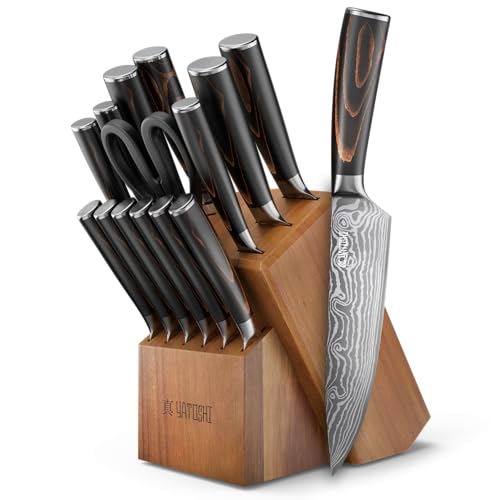
Yatoshi Professional Kitchen Knife Set, 15 Pieces, High Carbon Stainless Steel, Ergonomic Handle
Included for 'Best Japanese Kitchen Knife Sets' because the listing specifies 15 Pieces and High Carbon Stainless Steel, details this guide uses to compare options.
View on AmazonShortlist by cooking style
- Best balanced choice: Tojiro DP set. Tojiro’s DP line is a practical entry point to Japanese-style knives, typically using a VG-10 stainless cutting core with softer stainless cladding. Look for a gyuto-and-petty combination or assemble those pieces individually; availability and bundled contents vary. The thinner profile suits precise slicing, while stainless cladding makes care less demanding than fully reactive carbon steel.
- Best for a santoku-first kitchen: Global knife sets. Global offers coordinated stainless-steel sets and lightweight, slim-handled knives. A santoku-and-petty pairing works well for cooks who want a shorter all-purpose blade and a nimble small knife. The dimpled metal handle is distinctive, but its feel is personal: try a similar handle before buying a large set if you prefer a substantial, contoured grip.
- Best premium option: Shun Classic sets. Shun Classic knives use a VG-MAX stainless cutting core with Damascus-patterned cladding and a D-shaped composite handle. Sets commonly combine an 8-inch chef’s knife with smaller prep knives. They offer a polished finish and fine edge, but cost more than many basic stainless options, and the thin edge calls for careful cutting technique.
- Best for traditional carbon-steel upkeep: a Sakai-made carbon gyuto and petty pairing. Sakai is a Japanese knife-making center, and makers such as Sakai Takayuki offer many styles and steel options. Instead of choosing a large boxed set, select two compatible knives in a steel you can maintain. Carbon steel can take a keen edge but needs prompt washing and drying to limit rust and patina changes.
Compare the details that affect daily use
The figures below are typical ranges for common versions, not guarantees for every model or bundle. Check the exact manufacturer specification before ordering: weights, handle materials, and set contents can differ even within one product line.
| Option | Typical main blade | Steel and construction | Typical weight | Care and sharpening |
|---|---|---|---|---|
| Tojiro DP gyuto | About 210 mm / 8.3 in | VG-10 stainless core; stainless cladding | About 160–200 g | Wash and dry after use; sharpen when the edge loses bite |
| Global G-2 chef’s knife | About 200 mm / 7.9 in | Stainless steel, one-piece metal construction | About 170 g | Wash and dry; use a suitable whetstone or qualified sharpener |
| Shun Classic chef’s knife | About 200 mm / 8 in | VG-MAX stainless core; Damascus-patterned cladding | About 200 g | Wash and dry; protect the fine edge from twisting and hard impacts |
| Sakai carbon-steel gyuto | Commonly 210 mm / 8.3 in | Carbon-steel core; cladding and finish vary by model | Often about 150–220 g | Dry immediately; expect patina and more frequent touch-ups if heavily used |
Those weights are useful for narrowing the field, but balance matters as much as total weight. A knife that feels nimble near the pinch grip may be more comfortable than a lighter knife with balance that feels awkward in your hand.
Match the set to your kitchen
| Your situation | What to buy | Why it fits |
|---|---|---|
| New to Japanese knives; cooks several times a week | Stainless gyuto plus petty, around 210 mm and 130–150 mm | Two useful blade sizes keep care and technique manageable |
| Small counter or mostly vegetables | 165–180 mm santoku plus a 120–135 mm petty | Shorter blades are easier to store and maneuver; skip a long slicing knife unless you need it |
| Frequent cooking; ready to sharpen | Quality stainless or carbon gyuto and petty; budget for a whetstone | Two well-chosen knives are more useful than a large, uneven set |
| Occasional cooking; minimal upkeep | Stainless chef’s knife and utility knife, with a sharpener service nearby | Lower maintenance matters more than maximum edge refinement |
| Already own a good chef’s knife | Add a petty or bread knife only if it fills a real gap | A duplicate blade is not an upgrade simply because it comes in a set |
Profiles, edges, and handles: the practical differences
Gyuto or santoku?
A gyuto is the Japanese counterpart to a Western chef’s knife, often with a more pointed tip and a profile suited to slicing and rocking. A santoku is usually shorter, with a rounded “sheep’s foot” tip and a relatively flatter section of edge. It can feel controlled for push-cutting and everyday vegetable prep. Neither profile is universally better: choose the one that matches your board space and cutting motion.
Most home cooks should avoid using a thin Japanese blade to hack through bones, frozen food, or hard squash with force. Twisting the knife while it is buried in food can chip a hard edge. Use a sturdy cleaver or another appropriate tool for heavy work.
Steel, edge life, and sharpening
VG-10, VG-MAX, and other stainless steels resist rust better than common carbon steels, but they still need washing and drying. Stainless does not mean dishwasher-safe. Carbon steel usually develops a patina with use and can rust if left wet; its sharper-feeling edge is not a free performance upgrade if you dislike attentive care.
Edge retention depends on the steel, heat treatment, edge geometry, and what the knife cuts. A harder, thinner edge may stay sharp longer in ordinary prep, yet be more vulnerable to chips from hard contact. A sharpening steel or honing rod does not replace sharpening, and some hard Japanese knives can be damaged by aggressive grooved rods. A fine whetstone or a sharpener familiar with Japanese knives is the safer long-term plan.
Handle comfort and what “a set” really includes
Western-style handles are generally familiar and symmetrical; traditional Japanese wa handles are often lighter and may be octagonal or D-shaped. Neither shape suits every hand. Check the grip dimensions and balance if possible, especially if you have smaller hands or prefer a handle that fills your palm.
Count useful blades, not pieces. A sensible starter set often contains a gyuto or santoku and a petty. A paring knife can help with small hand work; a bread knife is useful if you regularly slice crusty loaves. A honing rod, scissors, block, and several near-duplicate chef’s knives can inflate the piece count without improving your prep routine.
Ownership costs and care that extend knife life
Entry-level Japanese-style sets commonly cost roughly $100–$250, midrange options about $250–$600, and premium multi-piece sets can exceed $600. Prices vary by maker, steel, handle, and bundle. If a two-knife set costs $300 and you use it five days a week for five years, that is about 1,300 uses, or roughly 23 cents per use before sharpening. The calculation is only a planning aid: the value depends on whether those knives actually replace tools you use.
- Use a wood or plastic cutting board; stone, glass, and ceramic surfaces wear or damage edges quickly.
- Hand-wash with mild soap, then dry promptly. Don’t leave the knife soaking in a sink or loose in a drawer.
- Store blades in a sheath, knife guard, block, or magnetic rack where edges cannot knock against other tools.
- Sharpen when the knife starts crushing or slipping on food, rather than waiting until it is very dull. Follow the maker’s recommended angle or use a professional who can preserve the blade’s geometry.
Bottom line: For most people, buy two good knives rather than the biggest bundle: a stainless gyuto or santoku that feels comfortable, plus a petty knife. Choose Tojiro DP for a practical stainless starting point, Global if you like its light metal handle, Shun Classic for a premium coordinated set, or a Sakai carbon-steel pairing if you accept the extra care. The best Japanese kitchen knives set is the one whose profiles fit your cutting habits and whose maintenance you will actually keep up with.